The Best Search Atlas Alternative For SEO Automation

Finding a capable search atlas alternative transforms a bloated SEO workflow into an automated growth engine. Complex marketing software demands constant attention from operators. Marketers face hundreds of overlapping metrics on bloated dashboards. Competing platforms force users to juggle multiple logins and execute manual data exports. These friction points trap founders and lean teams into managing software interfaces instead of capturing organic traffic. Replacing manual workflows with autonomous publishing systems bypasses hours of keyword research and document formatting. Connect the appropriate platform to your CMS to achieve daily publishing without human intervention. We built RankPine to serve this specific need. Users set the parameters once, and the system executes the entire content lifecycle.
Adding concrete examples to this friction reveals the real drain on marketing resources. A standard multi-tool stack forces operators to download keyword clusters as raw spreadsheets, upload those lists into a separate brief generator, and move the output text into a word processor for manual review. Marketing teams must memorize distinct interface layouts and manage multiple billing cycles across these disconnected services. Consolidating this scattered process recovers an average of fifteen hours per week for a standard content team.
Why Lean Teams Need a Search Atlas Alternative
The High Cost of Feature Fatigue
Software vendors try to serve every possible agency request. This product bloat creates steep learning curves for lean teams. Search Atlas charges between $99 and $399 per month for feature sets most users ignore. Customers end up paying for advanced link-building modules, deep site auditing crawlers, and white-label client reporting tools. Solo founders and small marketing teams require tools built for direct content execution.
A traditional technical site audit provides zero value to a new domain seeking its first thousand visitors. Small operations need published pages rather than technical debt reports indicating minor schema errors. Dedicating enterprise-level budgets to tracking metrics starves the actual content creation fund.
Every minute spent parsing complex charts equals a minute lost on production. Tool sprawl drains budgets and fragments attention. Consolidating your stack around a single execution-focused platform eliminates this waste. Audit your current SEO spend and cancel any subscription where your team uses fewer than three primary features. Log into one interface, establish your content parameters, and let the automation engine handle the publication schedule.
Execute a software audit this week. Download the past three months of login histories for your existing marketing tools. Identify any platform accessed fewer than four times per month. Cancel those redundant subscriptions and redirect that recovered capital into direct page creation.
The 3.5-Hour Manual Execution Bottleneck
Software vendors promote their AI assistants as time-savers. Orbit Media researchers found in a recent survey that the average blog post demands over three and a half hours to produce. This time sink exists because legacy platforms generate a raw text draft and stop.
Breaking down that 210-minute investment exposes the true cost of legacy tools. Keyword research consumes thirty minutes. Structuring the creative brief takes another twenty minutes. Generation and prompt engineering require a full forty-five minutes. Human editing and fact-checking demand another hour of dedicated attention.
Human operators must step in to finish the job. Marketers review the brief, prompt the generator, format the headings, add internal links, and hunt for credible statistics. Next, users copy the document, log into WordPress, paste the text, fix the line breaks, and upload a featured image. Writing meta descriptions and setting URL slugs force operators to waste another ten minutes. RankPine eliminates this manual execution bottleneck. The automated system handles the entire sequence from topic selection to clicking publish.
Manual CMS formatting introduces frequent human error. Writers forget to set the correct canonical tags or neglect to optimize the alt text on featured images. An autonomous system standardizes these technical elements across every published URL. The software maps the heading tags, compresses the featured images, and assigns the appropriate author profiles without requiring human oversight.
The Shift From Analysis to Autonomous Execution

Replacing Complex Dashboards with CMS Integration
Industry trends favor focused autonomy over all-in-one data suites. Traditional SEO software provides keyword lists and expects human writers to execute the vision. Autonomous engines read those lists, write the articles, and push them live. Direct CMS integration removes the final barrier to scale. Connect your WordPress REST API to enable direct posting. Administrators map custom post types and categories within the automation tool. The software sends formatted HTML straight to the server.
Connection setup requires three specific steps. Generate an application password within your WordPress user profile. Input the site URL and credentials into the RankPine dashboard. Select the exact author profile and category for all incoming articles. This connection establishes a continuous pipeline from the generation engine to the live website environment.
Managing manual pipelines forces teams to build complex content calendar templates in Google Sheets to track assignments and deadlines. CMS integration makes external tracking documents obsolete. The platform schedules the posts according to predetermined rules and populates the live database.
A static spreadsheet requires constant manual updates when publication dates shift. An integrated pipeline reads the live CMS database and adjusts the queue based on real-time server data. If an administrator deletes a drafted post within WordPress, the automation engine detects the gap and generates a replacement article to maintain the daily cadence.
The Rise of Generative AI Assistance
Content creation methods look different today than they did two years ago. Modern digital trends indicate that a significant and growing portion of newly created web pages now contain AI-generated content. Most of these AI writing assistants function as sophisticated typewriters. Human operators must provide constant prompting, steering, and supervision to produce usable text.
Basic language models output generic paragraphs lacking specific structural requirements. Instructing a standard chatbot to write a comprehensive SEO article results in repetitive fluff, missing subdivisions, and zero outbound authority links. The operator must feed the model an extensive prompt detailing exact section lengths, tone constraints, and keyword placement rules.
RankPine bypasses these manual prompt-based workflows by operating on global parameters. Administrators define the domain's topical focus and target difficulty metrics. The system researches competitors, identifies winning topics, generates the content, and schedules the post. Teams achieve continuous hands-free publishing without performing any manual text cleanup.
System administrators establish boundaries during onboarding. Select a professional tone, restrict topic generation to specific sub-niches, and mandate a set number of internal links per article. The platform applies these overarching rules to every subsequent generation task. This global parameter system prevents operators from rewriting the same instructional prompt every morning.
Top Search Atlas Alternatives for Modern SEO
Choosing the appropriate stack determines your organic growth trajectory. Compare the best generative engine optimization tools to find platforms matching specific workflow requirements.
| Platform | Primary Strength | Content Execution | CMS Integration |
|---|---|---|---|
| RankPine | Hands-free daily automation | Complete autonomy | Yes (Native) |
| Semrush | Broad competitive intelligence | Manual generation | No |
| Ahrefs | Backlink and keyword data | None | No |
| Answer Socrates | Question-based intent research | None | No |
1. RankPine (Best for Complete Automation)
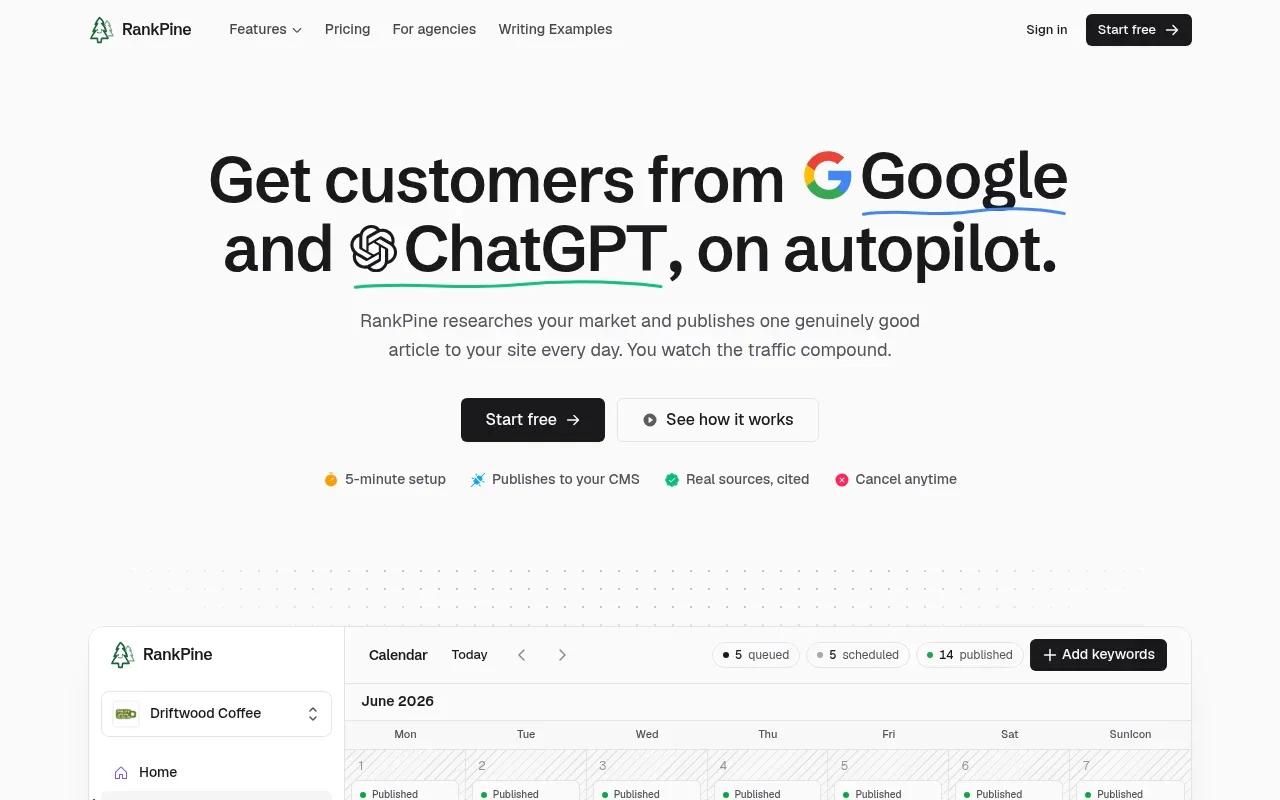
RankPine serves as the optimal solution for teams demanding guaranteed daily output. While traditional data platforms deliver lists of keywords, RankPine produces finished articles. The system analyzes market trends and identifies long-tail keywords featuring accessible ranking difficulty metrics. The software filters out high-competition head terms that waste search engine crawl budgets.
Consider a lean startup targeting the competitive fitness supplement market. Competing for a head term like "protein powder" requires millions of dollars in backlink acquisition. RankPine ignores that impossible target. The engine identifies an accessible query like "pea protein vs whey digestion time for athletes." It calculates the search volume, verifies a keyword difficulty score under 15, and initiates the creation process.
Once the algorithm selects a topic, RankPine writes an extensive article. The engine embeds verifiable citations into the copy to establish domain authority. It applies optimal heading structures and bulleted lists to improve readability. The application then pushes the completed product into the CMS queue. Users maintain a daily publishing cadence without opening a single text editor.
The embedded citation engine pulls statistics from trusted academic and industry sources. An article discussing workout recovery will feature genuine hyperlinks to published sports medicine journals. This automated sourcing satisfies search engine requirements for factual authority. Administrators wake up, check their live website, and see a new optimized page indexed in the search results.
2. Semrush (Best for Enterprise Marketing)
Semrush provides an enormous database for enterprise marketing departments. The platform tracks millions of keywords across global markets and delivers extensive competitor backlink analysis. Search marketers use the Keyword Magic Tool to uncover variations of core terms and cluster them by search intent.
Marketing managers rely on the Position Tracking module to monitor daily rank fluctuations across specific geographic locations. A retail chain can track distinct search volumes for physical store locations in specific zip codes. The tool outputs massive CSV files detailing exact search volume trends and cost-per-click estimates for Google Ads campaigns.
This analytical power comes with significant overhead. Semrush demands a dedicated operator to parse the reports and extract actionable insights. The software includes an SEO Writing Assistant, yet operators must type or paste text into a manual editor for scoring. Lean teams often find the interface overwhelming and the entry-level pricing restrictive. Use Semrush if your strategy prioritizes technical site audits and paid advertising intelligence.
The Pro tier provides limited data access for entry-level operations. Accessing the broader Content Marketing toolkit requires upgrading to the expensive Guru tier. Small teams paying for this upgraded tier still face the requirement to hire freelance writers or dedicate internal staff hours to type out the actual articles. A local plumbing business requires targeted page generation rather than global keyword tracking data across international borders.
3. Ahrefs (Best for Pure Data Analysis)

Ahrefs built its reputation on maintaining a massive commercial backlink index. SEO professionals use the platform to reverse-engineer competitor link profiles and audit site health. The Content Explorer tool allows users to find high-performing articles across any niche by filtering for social shares and organic traffic.
Technical SEO teams deploy the proprietary Site Audit crawler to identify 404 errors, broken redirects, and orphan pages deep within massive enterprise websites. The tool visualizes internal linking structures and calculates an overall Domain Rating score. Marketers use the link intersect feature to find websites linking to distinct competitors but ignoring their own domain.
The platform provides zero content execution features. The dashboard displays ranking topics and inbound link sources without generating text. Marketers must export this data, build comprehensive briefs, and hire external writers to produce the pages. Teams choosing Ahrefs must build a Zapier integration to move CSV exports into a dedicated project management tool for task tracking.
The vendor implemented strict credit limits on modern billing plans. Users consume a credit every time they open a new report or apply a list filter. A lean team pulling backlink reports for ten competitors and filtering the results by domain rating can exhaust their monthly allowance in a single afternoon. Operations requiring consistent content output gain little value from tracking credit usage across static dashboards.
4. Answer Socrates (Best for Topic Inspiration)
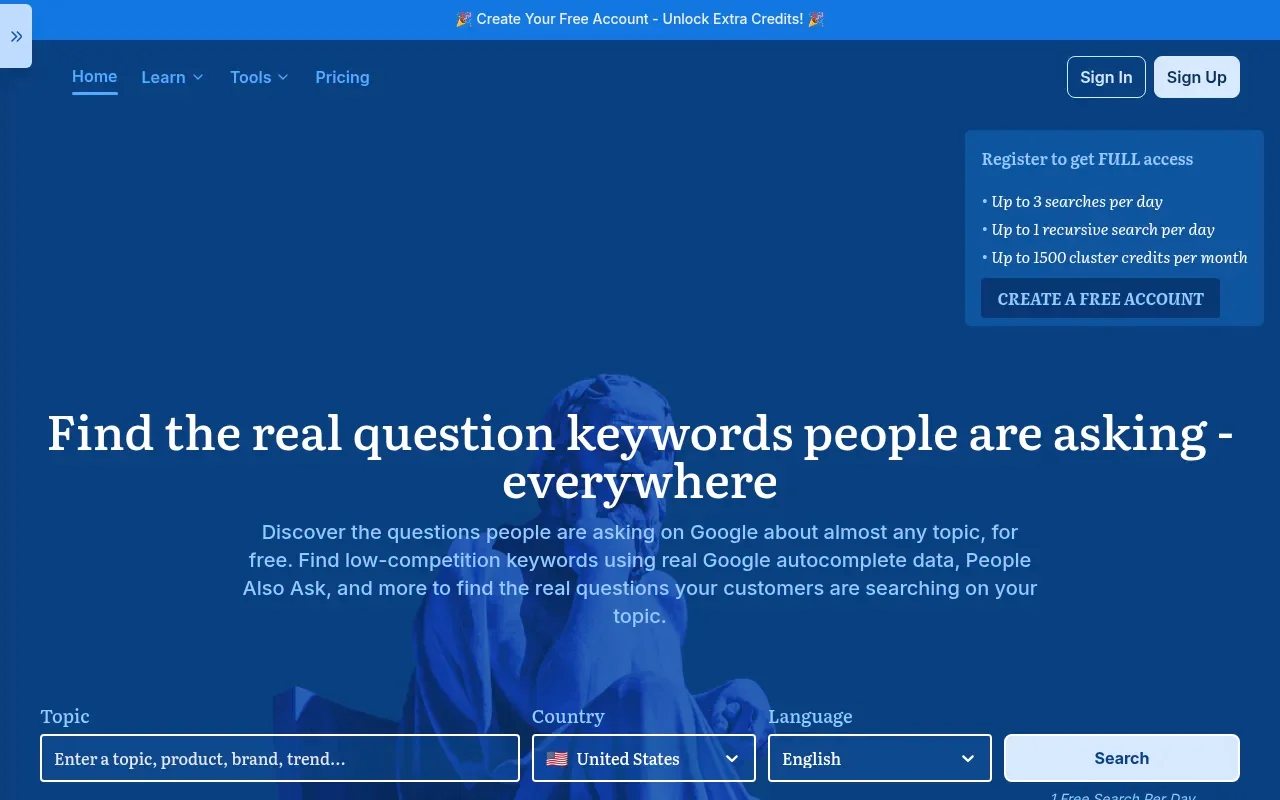
Answer Socrates serves a narrow purpose in the research phase. The tool scrapes Google Autocomplete and "People Also Ask" data to compile lists of questions users type into search bars. Enter a broad topic to retrieve hundreds of long-tail queries sorted by prepositions and question words.
Typing "coffee maker" into the interface returns specific user questions sorted into categories. Marketers discover precise queries like "can a coffee maker boil water for tea" or "when to descale espresso machine." This raw data uncovers specific informational needs neglected by major review sites.
This tool helps overcome writer block by revealing explicit user intent. Answer Socrates stops at the inspiration stage by providing zero search volume data, keyword difficulty scores, or content generation capabilities. Marketers must copy the exported questions into a secondary platform to evaluate their commercial ranking potential.
Users export a raw text file containing hundreds of unformatted strings. Content managers must paste these strings into a spreadsheet, delete duplicate questions, and verify the search volume using a separate paid tool. A question might generate zero searches per month or dominate a massive high-competition category. Answer Socrates offers no metric to differentiate a useless query from a profitable one.
Mastering Dual-Optimization: Google and AI Engines
Structuring Content for Answer Engine Optimization (AEO)
Search behavior extends beyond ten blue links. Semrush analysts report that 80% of consumers use AI summaries for at least 40% of their searches. Optimizing content for traditional Google algorithms leaves massive traffic segments on the table. Modern webpages must satisfy standard search spiders alongside conversational Answer Engines like ChatGPT, Gemini, and Claude.
These massive language models prioritize document structure over keyword density. A traditional algorithm counts keyword occurrences in the meta title. An Answer Engine evaluates the semantic relationship between sequential paragraphs. Pages lacking explicit factual answers hidden within long narrative stories fail to secure citations in conversational AI summaries.
Format the text to feed these Large Language Models. Answer engines scan for structured data and explicit answers. Place a direct factual answer to the target query in the first paragraph. Writers must avoid winding narratives and lengthy introductions. Use logical H2 and H3 structures to break the topic into digestible concepts. Add a bulleted takeaways list near the top of the page. RankPine applies these exact formatting rules to every generated article to maximize multi-platform visibility.
Implement a dedicated takeaways section immediately following the introduction. Limit each bullet point to a single declarative sentence. When explaining a process, use numbered lists rather than block paragraphs. ChatGPT extracts numbered steps with high precision when formulating responses to instructional queries. Incorporating strict HTML tables for data comparisons provides another optimal extraction point for Answer Engine crawlers.
The Requirement for Verifiable Citations
Generative text models hallucinate facts. Algorithm engineers adjust search guidelines to penalize unverified claims. Building topical trust requires mathematical proof. Embed primary source links within the copy to differentiate the domain from mass-produced spam.
A human writer might state that mobile commerce represents a large portion of digital sales. An optimized engine states that mobile devices generated 60% of digital retail orders in 2023, accompanied by an outbound link to the specific e-commerce data report. This explicit evidence separates authoritative resources from low-effort content farm operations.
Large Language Models scan documents for authoritative outbound links to calculate text confidence scores. A claim supported by a recognized industry study carries higher algorithmic weight than a standalone sentence. RankPine embeds verifiable citations into every article the system produces. This strict adherence to factual accuracy secures trust from traditional search evaluators and modern AI indexing bots.
Manual writers struggle to locate appropriate statistical links under tight deadlines. They resort to linking generic homepages instead of the specific data tables. The automated generation process scans vast databases of published research to locate the precise URL containing the required metric. This outbound linking strategy passes rigorous algorithmic quality checks without requiring manual verification from human editors.
Setting Up a 'Set-and-Forget' Organic Growth Engine
Targeting Realistic Long-Tail Keywords
Chasing high-volume head terms wastes marketing resources. Established domains hold the top positions for broad industry terms and seldom surrender them. Lean teams win by targeting specific low-competition queries that larger competitors ignore. Setting a target keyword difficulty score to 15 or below ensures new content has a mathematical chance of ranking.
A brand new domain features zero accumulated backlinks and no historical authority. Targeting a keyword with a massive search volume and a difficulty score of 65 guarantees failure. The content will languish deep in the search results, generating zero clicks. Identifying precise queries with 50 monthly searches and a difficulty score of 8 produces immediate visibility and initial traffic momentum.
Long-tail phrases match precise user intent. A visitor searching for "how to format JSON for real estate APIs" converts at a higher rate than a user searching for "APIs." Content managers build topical authority by covering hundreds of these specific questions. RankPine runs this difficulty analysis in the background. The algorithm discards high-competition terms and schedules topics matching the current domain authority.
- Define the core niche topics in the platform settings.
- Set a maximum keyword difficulty threshold under 20.
- Allow the engine to map a cluster of related long-tail queries.
- Review the scheduled queue to ensure topical alignment.
Set specific exclusion rules to block irrelevant terms. If your real estate software targets commercial brokers, instruct the platform to ignore keywords containing "residential" or "single-family." This granular control ensures the automation engine only produces content targeting your ideal commercial buyer profile. Review the scheduled batch once per month to confirm the topic clusters align with upcoming product releases.
Maintaining a Daily Publishing Cadence
Consistency builds topical maps faster than erratic publishing bursts. Search engine algorithms reward domains demonstrating ongoing freshness and activity. Publishing one structured article every day signals to crawlers that the site requires frequent indexing. BrightEdge researchers observed that organic search drives an average of 53% of trackable website traffic, though this ranges from 41% in retail to 64% in B2B industries. Capturing that traffic requires relentless execution.
Publishing ten articles on a Monday and abandoning the blog for three weeks damages crawler trust. Search bots learn to ignore sporadic websites. A domain posting a new comprehensive article every morning trains the search engine spider to return daily. This rapid indexing ensures new industry developments appear in search results within hours of publication rather than weeks.
Manual teams struggle to maintain a daily publishing schedule. Vacations, competing priorities, and writer block disrupt the calendar. Automated systems remove human inconsistency from the production pipeline. The RankPine scheduling engine handles this continuous cadence. The application pushes content live on weekends, holidays, and busy product launch days. Founders capture search traffic while directing their energy toward closing sales and building the business.
Consider the mathematical output of a daily automated schedule. A human writer completing two posts per week delivers 104 articles over twelve months. An autonomous system publishing daily produces 365 optimized pages in the same timeframe. This massive expansion of indexed URLs triples the surface area available for search engine traffic. Establish your CMS connection, set the parameters, and transition your team from writing text to closing inbound leads.
Stop managing SEO tools and start publishing. RankPine automates the content pipeline by delivering researched, formatted articles straight to the CMS every day. Start your automated growth engine today.