How To Build Content Calendar Templates Google Sheets Fast

Marketing teams burn hours every week adjusting rows and color-coding statuses in shared documents. Building functional content calendar templates google sheets takes substantial effort. A project kickoff prompts teams to fill a planner with target keywords and assign ambitious due dates. One month later, the department abandons the file when publishing falls behind schedule. Automated platforms like RankPine replace manual tracking methods to keep production moving. Modern search demands consistent daily publishing. Static grids lack the ability to research topics, write drafts, or push articles to a content management system. Prioritize active execution over passive planning.
The State of Content Planning in 2026
The "Spreadsheet Trap"
Marketers confuse tracking with action. Opening a blank grid and typing title ideas feels productive, but documenting ideas generates zero search traffic. Tracking systems demand constant maintenance from project managers who spend afternoons pinging writers for updates and altering due dates. A colored grid provides a false sense of security. Having a plan on a screen tricks teams into thinking they make progress toward revenue goals. Separate the act of planning from the act of publishing. Tracking tasks consumes hours better spent on content creation.
Strategy vs. Calendar
A strategy defines target audiences, core topics, and business goals. A calendar plots specific tasks against a timeline. Many marketing teams confuse the two concepts, despite the Content Marketing Institute finding that only 47% of B2B marketers document their strategy. Draft a documented strategy before plotting dates on a grid. Define audience pains to map product features as direct solutions to specific problems. Determine which formats serve those solutions before auditing existing posts. Group your content clusters by persona and sales funnel stage. Identify keyword gaps where competitors capture traffic to build a list of seed topics. Lean teams bypass manual scheduling bottlenecks by adopting RankPine. The platform reads strategic inputs and automates the scheduling phase. RankPine generates and publishes one optimized article each day.
How to Set Up Content Calendar Templates Google Sheets
Essential Columns to Include
Blank workspaces intimidate users. Functional trackers require specific data points to keep production moving. Build your content calendar templates google sheets around six core columns.
| Column Name | Purpose | Data Type |
|---|---|---|
| Title | The proposed headline for the article. | Text |
| Target Keyword | The primary search phrase you want to rank for. | Text |
| Search Volume | Monthly query volume for the target keyword. | Number |
| Status | The current production stage of the draft. | Dropdown |
| Due Date | The deadline for final publication. | Date |
| Live URL | The destination link after publishing. | URL |
Format the header row to stand out and freeze the top row. Freezing the row keeps column titles visible as the database grows. Wrap text in the title column to maintain uniform row heights. Assign clear document ownership and restrict edit access to core team members to prevent data loss. Add a secondary tab for a performance dashboard. Apply the =COUNTIF(D2:D100, "Published") formula to track output totals. Build a standalone dashboard to give executives a quick snapshot of production volume without forcing them to scroll through hundreds of rows.
Using Data Validation for Workflows
Manual text entry breeds errors. One writer types "Editing" while another types "In Review." Typing inconsistent statuses breaks sorting functions and renders dashboard formulas useless. Use the Google Sheets Data Validation feature to standardize inputs, as standardizing status fields keeps cross-functional teams aligned.
Open the file and highlight the Status column. Click Data in the top menu before selecting Data Validation. Choose the Dropdown criteria and add items for Ideation, Drafting, Editing, and Published. Assign distinct background colors to give a visual identity to each stage. Select gray for Ideation, yellow for Drafting, orange for Editing, and green for Published. Color coding provides project managers an immediate visual snapshot of the production pipeline. Add conditional formatting to the Due Date column. Configure the spreadsheet to highlight cells red when a date passes. Set approaching dates to trigger a yellow highlight within three days. Automated visual cues reduce the need for manual status meetings.
Applying the "Hub and Spoke" Model to Your Calendar
Mapping Intent Clusters
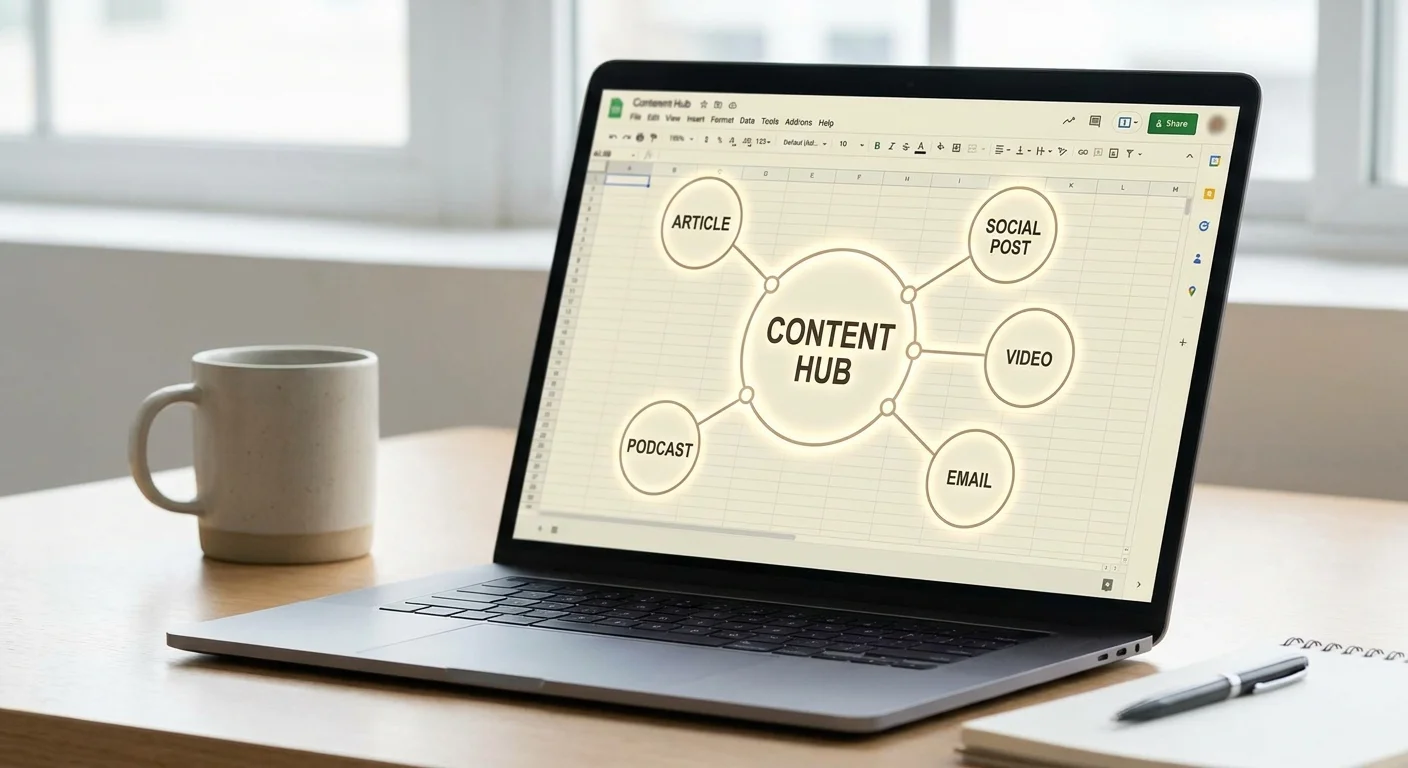
Random keyword selection leads to poor ranking performance. Search algorithms reward sites that demonstrate topical authority. The hub-and-spoke model organizes topics into interconnected clusters. A central pillar page targets a broad search term while supporting articles target specific long-tail variations. Link these supporting pages back to the central pillar. A hub titled Email Marketing Tools connects to spokes like Best Email Tools for E-commerce and How to Set Up Automated Sequences.
Robust topical clusters signal expertise to search algorithms. Map these relationships inside your content calendar templates google sheets by inserting a new column labeled Cluster Hub. Assign every new row and target keyword to an existing hub page. Delete topics lacking a parent hub. Create a secondary tab in the workbook to list all major hubs. Track the total number of live spokes connected to each hub. Shift focus to the next topic cluster when a hub reaches ten supporting articles. Apply this disciplined approach to prevent writers from chasing random trends.
Organizing Topics by Funnel Stage
Buyer intent dictates format. Users searching "what is CRM software" want definitions, while users searching "best CRM for enterprise" want comparisons. Balance top-of-funnel education with bottom-of-funnel transaction queries across the publishing schedule.
Add an Intent column next to the target keywords with dropdown menus containing Informational, Navigational, Commercial, and Transactional tags. Review the schedule for the upcoming month and count the items assigned to each intent type. Building an unbalanced schedule starves the sales pipeline. Publishing broad informational text drives low-converting traffic. Writing excess transactional text ignores new prospects entering the awareness phase. Filter the spreadsheet by intent before assigning specific writers to specific stages. Assign technical copywriters to handle transactional pages. Direct subject matter experts to write informational posts. Match writer skillsets to intent stages to improve overall output quality. Track conversions from each stage to optimize future topics.
The Hidden Costs of Manual Spreadsheets
Time Drain on Lean Teams
Managing a grid requires constant administrative effort. Small business owners dedicate hours each week researching keywords, updating statuses, and moving files. Formatting cells subtracts time from strategic planning and traps marketers in administrative overhead. Content production requires a predictable rhythm. Breakdowns happen when team members forget to check the shared file. Missing a deadline on Tuesday cascades into an empty content management system on Friday. Manual systems lack alert mechanisms, hiding errors until a manager opens the document.
Relying on aspirational planning damages consistency. Marketers populate content calendar templates google sheets with highly competitive short-tail keywords. A local pet store tries to rank for "dog food" instead of targeting a long-tail variation like "grain-free bulldog food online." Ranking for broad phrases requires extensive link profiles and technical optimization. Teams produce three broad posts, see zero traffic, and quit. RankPine offers an alternative to this failure path. The platform analyzes the specific niche and targets winnable long-tail variations. Bypass impossible keywords to build steady organic momentum.
The Tool Fragmentation Problem
Modern marketers manage sprawling software stacks. Marketing teams log into a keyword research tool to find phrases. Writers copy those phrases into a shared document, and an external word processor holds the article outline. Grammar checkers process the text. Publishers download images from a stock site before formatting the final draft inside a content management system.
Fragmented workflows destroy efficiency. Data shows 79% of B2B marketers claim to use at least 11 different marketing software applications. Moving data across multiple interfaces introduces formatting errors. Links break, images lose compression, and meta descriptions disappear during copy-and-paste actions. Consolidate marketing tools. Audit current software subscriptions to cancel separate keyword tools and project management boards. Streamline operations by adopting comprehensive solutions. Eliminate the copy-and-paste tax with automation to reclaim hours of wasted administrative time. Ensure data sharing complies with user agreements when connecting automated text generation. Review platform Privacy protocols and DPA documentation to secure corporate data.

Why End-to-End Automation Outperforms Google Sheets
Transitioning from Spreadsheets to RankPine
Recording data in manual grids preserves history. Running automated engines executes future tasks. RankPine functions as an autonomous publishing engine. Provide seed topics and business details to let the software take over. The system searches for viable long-tail queries, crafts detailed outlines, and writes complete articles. RankPine sources verifiable citations to support claims and pushes the finished post to the website. Administrators skip opening blank rows. Website managers log into the dashboard to see fresh posts published on schedule.
Publishing at a consistent volume drives traffic. Generating measurable organic growth requires relentless execution. Campaigns need multiple posts a week sustained over a six-month period to move baseline metrics. Human writers miss deadlines. RankPine publishes one optimized article every day to automate discipline. Lean teams outproduce large agencies by trusting execution to autonomous platforms.
Dual Optimization for AI and Google
Search behavior changed in 2026. Users bypass traditional result pages to ask complex questions to artificial intelligence models. Platforms like ChatGPT, Claude, and Gemini provide direct answers with source links. Written text must satisfy both traditional algorithms and new chatbot engines. Static documents fail to train writers on generative engine optimization. RankPine dual-optimizes every piece of text. The platform structures headings for Google snippets and embeds verifiable citations for AI platforms. Generative models penalize hallucinations. Modern authors weave documented facts throughout the narrative to secure AI citations.
Optimize for chatbots by answering user intent in the first sentence. Write precise definitions and avoid long introductions. Explore the specific software capabilities shaping this shift in our breakdown of the best generative engine optimization tools for 2026. Upgrade the marketing toolkit to ensure the brand remains visible across all search surfaces.
Transitioning to the SMVP (Smallest Minimum Viable Persona)
Ditching Bloated Planners
Marketers filling traditional persona documents list broad demographics. Knowing that a fictional buyer drives a minivan fails to help writers draft an article. Writers require exact customer language to capture intent. Marketing teams abandon extensive demographic dossiers in favor of agile frameworks. Adopt the Smallest Minimum Viable Persona. Agile personas focus on urgent buyer problems. Define the immediate pain point. Document the exact language the buyer uses to describe that pain before writing the solution.
Pull raw material from sales calls and export text transcripts from video meetings. Ask the sales team to highlight recurring phrases. Prospects complaining about fragmented billing cycles provide the exact phrase to use in headings. Customer words convert at higher rates than marketing jargon. Record these specific phrases in the strategy database.
Agile Content Execution
Generative tools solve the blank page problem. The modern challenge shifts from generating volume to maintaining editorial standards. Guide automated systems with specific inputs. Create an intake form for sales and support teams. Ask staff to submit frequent customer questions. Feed these questions into RankPine as seed topics. The automation engine expands a single customer question into a detailed, cited article. Building this feedback loop connects frontline customer insights with continuous publication.
Brands require a strong digital presence to survive. Relying on manual spreadsheets forces marketers to manage administrative tasks instead of engaging customers. Embrace automated pipelines to prioritize human-directed strategy over human-powered data entry. Set the strategic direction and program the software to execute the daily schedule.
Stop managing empty rows and start generating traffic. Head over to RankPine and automate your content calendar. The platform researches, writes, cites, and publishes optimized articles to the site every day. Trust RankPine to handle the execution while the team focuses on growing the business.