The Best Generative Engine Optimization Tools for 2026

Consumer behavior shifted from standard search engines to conversational chat interfaces. Analysts at Similarweb report that 35% of US consumers use AI tools during the product discovery phase. Traditional search captures 13.6% of that same funnel stage.
User inputs on these conversational platforms average 18 to 22 words per prompt. Standard four-word keyword targeting fails to capture this traffic. These long, conversational requests require a specific structural approach to content creation. Marketers use RankPine to build the automated infrastructure needed to capture this audience. You can use the platform to analyze market trends, identify winnable long-tail topics, and format your content to meet modern large language model (LLM) grounding requirements.
The Business Case for GEO Tools in AI Search
Generative Engine Optimization (GEO) rebuilds your content strategy around the way AI models retrieve information. Large language models do not crawl the web to find the most popular page. Engineers program these models to use Retrieval-Augmented Generation (RAG) to extract verifiable facts from indexed pages and synthesize a direct answer.
The Rise of Generative AI Search
Organic traffic sources have shifted. Users ask multi-turn questions, refine their parameters, and demand synthesized summaries in AI chat sessions.
Adapt your analytics tracking to measure this shift. Open your web traffic dashboard. Filter your referral sources for terms like chatgpt.com, perplexity.ai, and gemini.google.com. You will see your baseline AI visibility in the resulting data. Traditional SEO tools miss this data because they track SERP positions. AI measurement requires tracking LLM citations.
Overcoming the Zero-Click Challenge
Google changed the mechanics of organic traffic with AI Overviews. When these generated summaries appear at the top of a search results page, the zero-click rate jumps to around 80%. Users read the AI answer and abandon the search session without clicking a single link.
Failing to appear inside the text of the AI Overview costs you the impression.
To secure placement inside generated answers, you must transition from promotional copy to factual density. Algorithms exhibit a bias toward authoritative, third-party earned media. Developers design them to look for consensus across multiple trusted domains. If your website makes a claim that no other trusted source corroborates, the AI model ignores your page to prevent hallucination.
Review your top ten landing pages. Remove the marketing adjectives to reveal the core information. Count the remaining verifiable facts. If you find a low number of facts, the language model lacks the raw material needed for extraction and citation.
Top Content Creation and Automation Tools for GEO
Formatting content for language models requires a distinct structure. Developers program AI algorithms to prioritize dense paragraphs containing clear entities, formatted lists, and attributed claims. You can use specialized software to automate this formatting process.
RankPine: Automated GEO Execution
Manual content creation fails to scale when targeting conversational AI prompts. Users ask thousands of variations of the same long-tail question. You can solve this volume challenge through RankPine's strategic automation.
You can manage the entire lifecycle of your website's blogging strategy on autopilot using RankPine. Marketers use the platform to identify long-tail keywords with low ranking difficulty. You can set the tool to generate one researched article and publish it to your CMS every day.
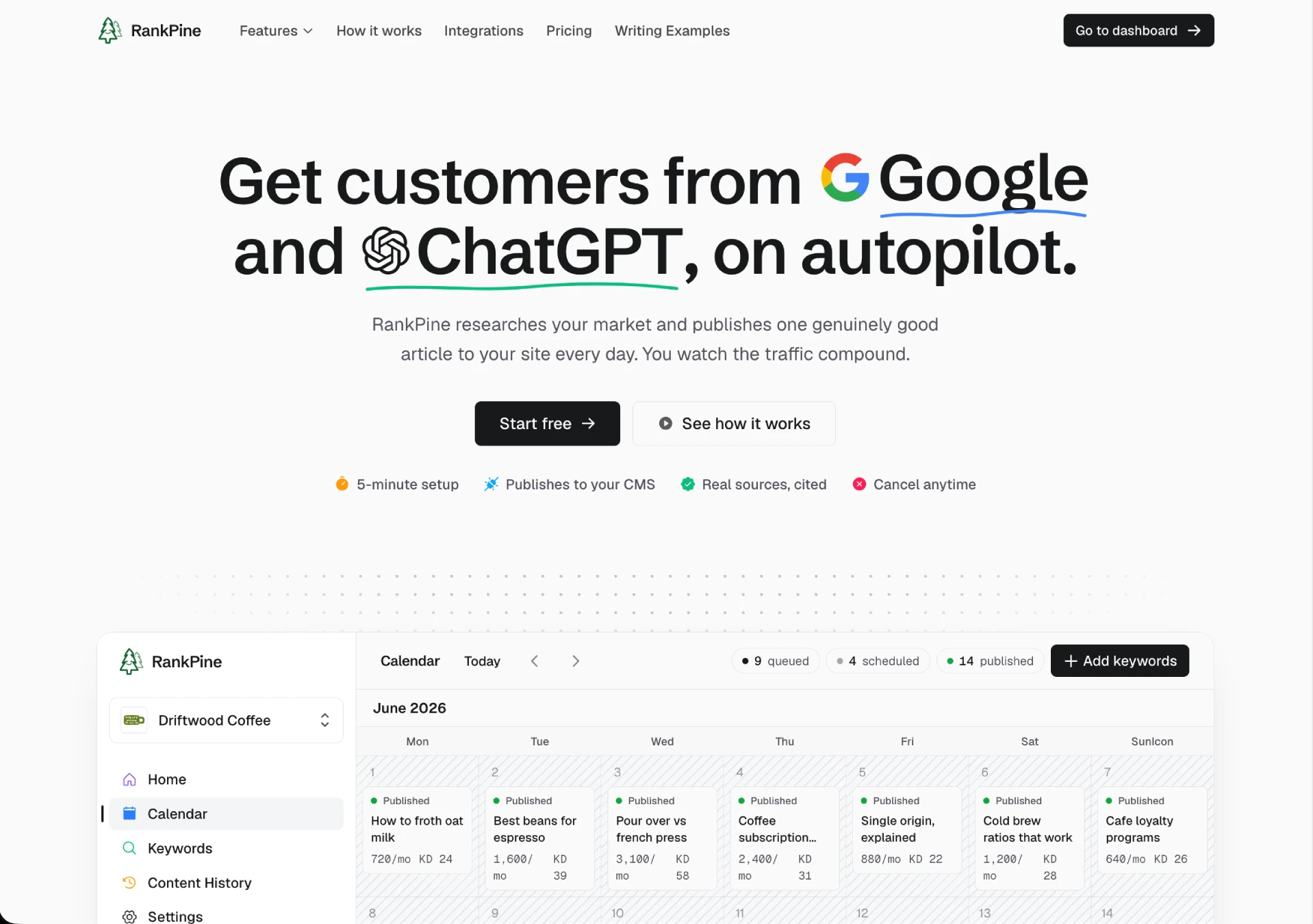
You build the topical authority that RAG systems require through this daily publishing cadence. RankPine optimizes for both traditional search engines and modern AI chatbots.
You can embed citations into every post using the platform. Researchers at Princeton University proved that citing authoritative sources increases LLM visibility by up to 40%. RankPine automates this attribution process. Producing readable text closes the fluency gap. You will achieve an additional 29% gain in AI answer visibility by improving prose readability. By producing dense, factual text, you give language models the exact syntax they require.
Configure RankPine to target your primary topic clusters. Next, connect your CMS through the integration dashboard. The platform will automate the daily research, formatting, and publishing required to maintain AI visibility.
Frase and Surfer SEO: Manual Entity Structuring
Some marketing teams prefer to write every sentence by hand while still optimizing for language models. Frase and Surfer SEO provide the manual structuring environments required for this workflow.
You can use both tools to analyze top-ranking pages and reverse-engineer the entities needed to establish topical relevance. Input a seed keyword to initiate the scan. You will receive a list of related terms and concepts that a language model expects to see in a complete answer.
Use Surfer SEO to score your draft against competitors. You will see missing entities highlighted in red inside the content editor. Insert these terms to state concrete facts.
Marketing teams use these manual tools to execute traditional entity mapping. They require dozens of human hours to execute. You must research the statistics, format the citations, and publish the final drafts yourself. Use RankPine for automated growth, and reserve Frase or Surfer for flagship content pieces that require a specific brand voice.
Feature CategoryRankPineManual Editors (Surfer/Frase)Content GenerationFull article generationOutline and brief generationCitation FormattingAutomated integrationManual research requiredPublishing CadenceDaily automated CMS syncManual upload requiredPrimary Use CaseScaling long-tail AI trafficHand-crafting pillar pages
Visibility and Share of Voice Tracking Tools
SEO professionals use traditional rank trackers to report positions on a Google search results page. This metric loses value when the search market fragments across multiple private chat interfaces.
Engineers build each large language model using different weighting systems and citation logic. Ranking number one in Google Search does not guarantee a mention in a Gemini response.
xSeek and Specialized LLM Trackers
You need specialized tracking software to measure brand presence across fragmented AI ecosystems. You can measure your share of voice inside generated answers using xSeek.
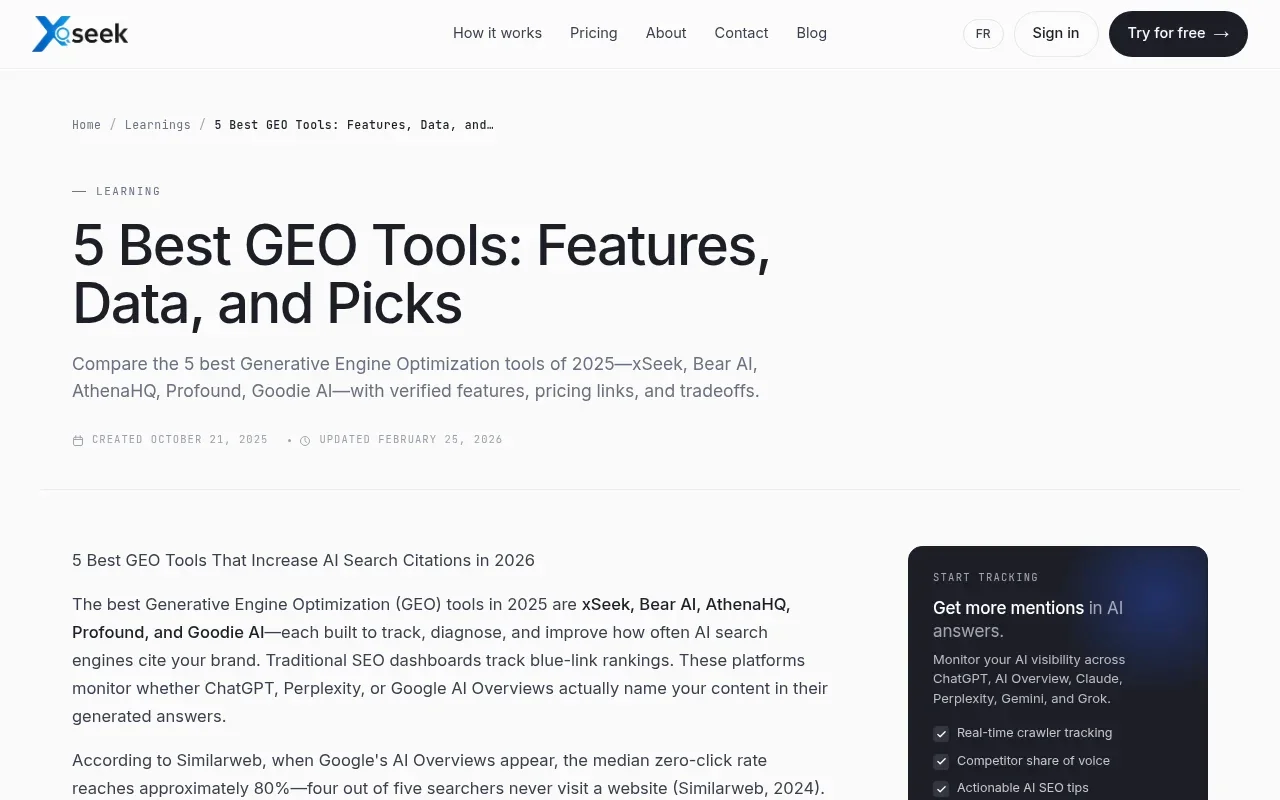
Instead of tracking blue links, xSeek sends your target queries to multiple LLMs. You can use the platform to read the generated responses and calculate how often your brand domain appears in the text or the citation footnotes.
Create a project in xSeek. Upload a list of 50 conversational questions your customers ask during product discovery. Run the analysis. You will see your citation percentage across ChatGPT, Claude, and Perplexity in the dashboard.
Track this metric each month. As you publish more factual content through platforms like RankPine, your citation percentage in xSeek will climb.
HubSpot AI Search Grader
Language models build an internal perception of your brand based on the sum of your indexed content. You can evaluate this perception using the HubSpot AI Search Grader.
Enter your domain into the grader tool. You will test how top LLMs interpret your brand positioning, product features, and market category. You will spot discrepancies between your marketing messaging and the synthesized summaries.
If you see that ChatGPT associates your software with outdated features, you have an entity alignment problem. Fix this by publishing updated technical documentation and distributing press releases to third-party domains. Developers program AI models to weigh external validation heavier than brand-owned claims.
Proven Tactics to Maximize Your GEO Software
RAG systems run on strict hallucination guardrails. Engineers build them to require structured, verifiable data before formulating an answer.
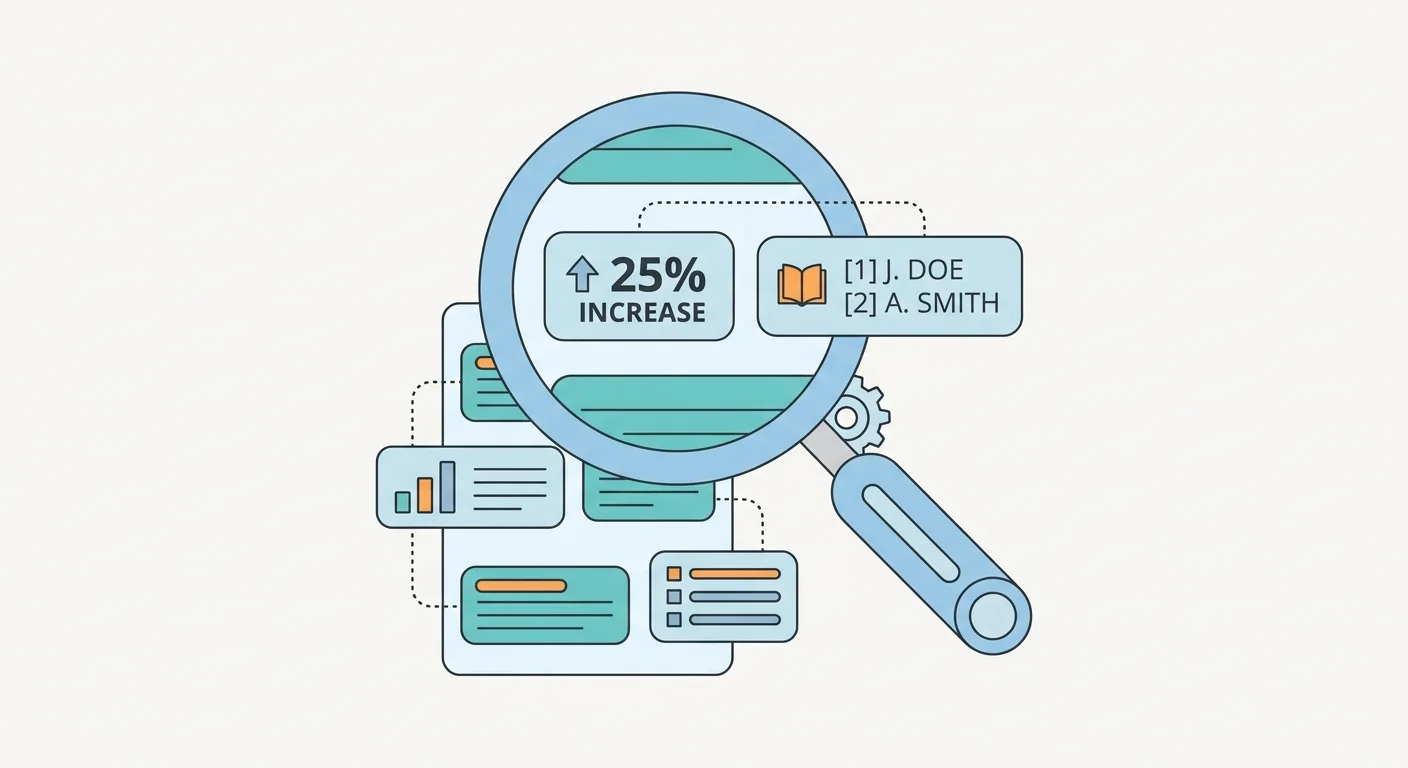
Apply these formatting tactics to the content your tools produce.
Embed Hard Statistics and Citations
AI algorithms filter out qualitative marketing fluff. They search for concrete data points to construct factual responses. Replacing vague assertions with specific, cited numbers increases AI visibility by up to 41%, though the exact impact varies by content domain and industry.
Review a draft article. Locate sentences that rely on adjectives.
Remove: "Many businesses struggle with low conversion rates on their mobile websites."
Insert: "Mobile website conversion rates average 1.8%, while desktop rates reach 3.9%, representing a 53% performance gap."
Link the statistic to the source. Hyperlink a natural phrase in the sentence. Do not use academic parenthetical citations. Language models parse HTML anchor tags to establish the relationship between the claim and the source domain. Treat every verifiable assertion as a claim that requires attribution.
Integrate Expert Quotes
Adding expert quotations stands as an effective manual GEO tactic. Formatting attributed quotes from researchers or practitioners boosts AI visibility by around 28% to 32% in news and informational queries.
Language models look for authoritative consensus. A direct quote provides a structured soundbite that the algorithm can extract and present to the user.
Enclose quotes in HTML <blockquote> tags. This specific tag signals to the parsing algorithm that the text represents an external, authoritative statement. Include the expert's full name, their professional title, and a link to their original statement.
Match your formatting strategy to your specific industry. The impact of these tactics varies by content domain. Law and government websites see the highest visibility lift from embedding statistics. History and culture content benefits most from expert quotes. Analyze the AI Overviews in your niche to see which format the algorithm prefers for your target keywords.
Align your content strategy with the way algorithms process information. Format data for machine extraction. Maintain a daily publishing schedule to build required domain authority. Focus on the long-tail conversational prompts that dominate modern search behavior.
Stop writing content by hand. RankPine handles the research, citation formatting, and publishing required to dominate modern AI search platforms and traditional search engines. Build your automated content pipeline at RankPine today.