Does Posting Every Day Help SEO?
Posting every day can support organic growth, but a frequent publishing schedule provides no guaranteed ranking advantage. Adding pages to a website merely to make it look active will not produce a traffic multiplier. Instead, the actual impact of posting every day on SEO comes from building a consistent content operating system that systematically expands a site's coverage of distinct, useful topics over time. That value depends on answering real audience questions, grounding those answers in reliable research, linking related answers together, and monitoring the results.
Does Posting Every Day Help SEO?
The Short Answer: Indirect Benefits, No Daily Bonus
Search engines do not award points because a website updates its blog every twenty-four hours. A daily schedule provides an indirect benefit by increasing the number of relevant search opportunities a site targets, as each new article is another chance to match a specific user intent, earn a click, and move a reader toward a conversion.
Publishing volume helps only when every page has a clear purpose and adds distinct value. If a site publishes generic summaries of existing search results, the increased frequency creates more low-value URLs to manage rather than more traffic.
Google's Guidance on Publishing Frequency
Google evaluates pages based on how well they satisfy user intent. The company’s people-first documentation warns that adding large amounts of content mainly to make a site appear fresh will not improve overall search rankings.
This guidance separates operational consistency from algorithm manipulation. A steady content pipeline helps an organization cover its industry comprehensively, building topical authority naturally. However, using that same schedule to pump out unrelated pages, rewrite competitor articles, or artificially inflate page counts turns consistency into a form of manipulation that Google's spam algorithms are designed to discount.
Treat Frequency as an Operating Decision
Instead of viewing daily publishing as an SEO shortcut, treat it as a disciplined production process. Consistently publishing well-researched pages requires a system to vet ideas, verify facts, structure headings, and format internal links. For many organizations, the friction of this process causes content efforts to stall entirely.
RankPine acts as an execution layer to remove that friction. The platform allows a lean team to build a set-and-forget SEO content strategy by handling topic discovery, research, drafting, citing, and scheduling. By automating the production steps, RankPine makes a quality-controlled daily cadence practical without requiring a dedicated internal editorial staff. Automation supports the workflow, allowing you to maintain editorial standards across a high volume of output.
How Daily Publishing Can Help SEO
Cover More Distinct Long-Tail Questions
A daily cadence allows a site to address highly specific, long-tail search queries that might not warrant a massive definitive guide but still represent real buyer intent.
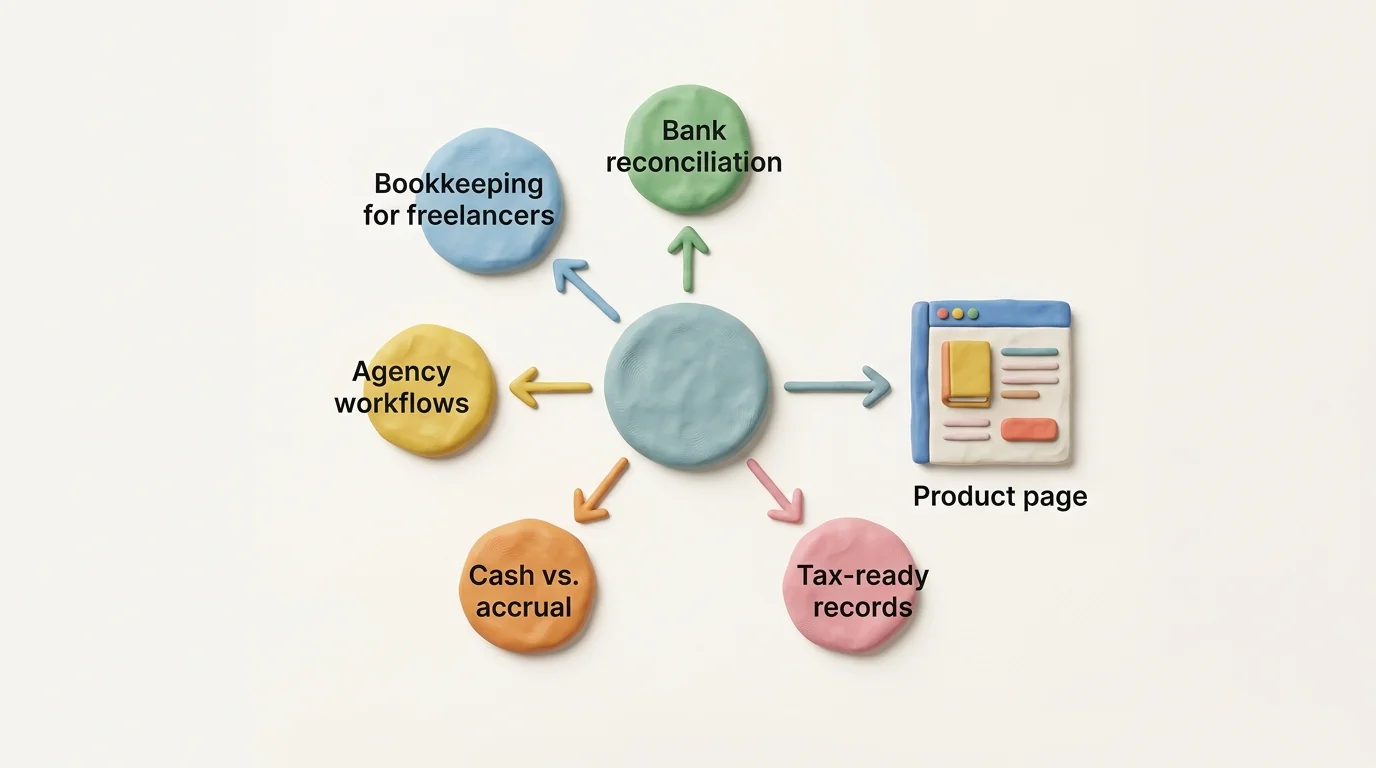
Consider a software company targeting bookkeepers. A slow publishing schedule might force the team to cram every feature into one broad landing page, whereas a daily program allows them to create separate, focused articles for distinct user needs:
- Bookkeeping software for freelancers
- How to reconcile business bank accounts automatically
- Bookkeeping review workflows for agencies
- Cash-basis versus accrual accounting configuration
- Preparing end-of-year records for a tax professional
The benefit here comes from answering distinct questions. A focused site with a broad surface area can capture traffic across the entire customer journey, from early awareness to late-stage technical troubleshooting.
Strengthen Internal Links and Topic Coverage
A growing library of distinct articles gives you more opportunities to build a logical site architecture. The official SEO starter documentation emphasizes that links help users and search engines discover other related pages while providing context about the linked resource.
A well-planned program can create a dense network of these connections. You can link a main hub page out to five supporting articles, point those supporting articles back to the hub, interlink related concepts, and funnel informational readers toward commercial product pages. This structure can distribute link equity across your domain and keep users engaged with your brand rather than returning to the search results.
Create a Performance Learning Loop
Frequent publishing accelerates the feedback cycle. When you put a new article into the market every day, you gather performance data faster, allowing you to observe which topic clusters attract impressions, which titles generate high click-through rates, and which search questions indicate commercial intent.
This learning loop helps you decide what to expand, merge, or retire. If a cluster of posts about "agency workflows" drives consistent signups while posts about "freelancer tips" generate empty traffic, you can use that evidence to refine your upcoming content calendar. The cadence gives you the data required to refine your SEO strategy over time.
When Posting Every Day Can Hurt SEO
Empty Freshness Creates No Value
Adding new pages to maintain a streak on a content calendar is a weak strategy. Freshness matters for queries tied to current events, software updates, or timely data. However, changing publish dates on old concepts without making substantive revisions provides no value to readers. A new page serves a purpose when the intended audience has a distinct question that the site can answer better than existing search results.
Thin, Repetitive, or Off-Topic Pages
High publishing volume becomes an active liability when it generates low-value pages. A daily workflow without editorial guardrails often produces near-duplicate articles targeting slightly different variations of the same query.
Publishing separate URLs for "best CRM for small businesses," "best CRM software for small companies," and "top small-business CRM tools" forces your own pages to compete against each other. Google’s language-matching systems can account for related modifiers and synonyms, so creating a dedicated page for every minor keyword variation splits your authority and frustrates users who click expecting a different angle but find an identical list. One strong, comprehensive page works best when the search intent remains substantially the same.
AI Scale and Content-Library Maintenance
Scaling production with generative AI presents distinct quality risks. While AI is highly effective for structuring outlines and summarizing research, generating massive amounts of text without adding original insight may violate scaled-content-abuse policies. The penalty risk lies in producing generic summaries, unsupported claims, and rewritten competitor content that offers no net-new value.
High volume also introduces a heavy maintenance burden. As you publish hundreds of articles a year, older content becomes outdated. Facts change, product interfaces update, and links break. A daily publishing strategy requires a maintenance allocation to update inaccurate pages, consolidate overlapping concepts, and delete content that is no longer relevant, because neglecting the existing library while continually adding to the top of the pile results in a sprawling, inefficient website.
How to Choose a Sustainable Publishing Cadence
Publish at the Highest Quality-Preserving Frequency
There is no universal publishing schedule that applies to every domain. The most effective rule is to choose the highest frequency that allows you to preserve usefulness, originality, accuracy, and your capacity to maintain the library. A consistent schedule helps a team execute reliably, but the cadence must remain subordinate to content quality.
| Publishing Cadence | Best Suited For | Warning Signs It Is Failing |
|---|---|---|
| Daily | Deep topic pools, distinct search intents, automated research workflows, strong editorial review. | Near-duplicate keyword targeting, factual errors, skipping source verification. |
| Weekly | Complex technical topics requiring custom diagrams, original primary research, or executive interviews. | Inconsistent publishing, missed deadlines, failing to cover enough long-tail variations. |
| Monthly | Massive definitive guides, industry benchmarking reports, interactive data visualizations. | Stagnant overall traffic, inability to target specific commercial queries quickly. |
When Daily Publishing Fits
Daily output fits a solo founder, a niche site builder, or a lean marketing team when there is a deep pool of relevant customer questions, especially if you have a clearly defined audience with hundreds of distinct use cases.
To execute this strategy without burning out, organizations implement lean marketing team SEO strategies that standardize the research and formatting phases. When you have a reliable system for fact-checking, generating internal links, and periodically refreshing older pages, daily publishing can create a durable advantage over slower competitors.
When Less-Frequent Publishing Wins
A slower cadence is wiser when daily output would force you to compromise your standards. If meeting a daily quota requires you to rewrite existing articles, target insignificant keyword variations, skip source verification, or publish topics outside your site's core expertise, dial the frequency back.
A highly accurate, thoroughly researched article per week can be more valuable than seven weak variations padded with filler words. Letting the depth of the query determine the length of the page yields better results than using word count to meet an arbitrary daily target.
How to Publish Every Day Without Sacrificing Quality
Vet the Topic and Search Intent
Every proposed article needs to pass a basic quality gate before drafting begins. The topic must fit the site's main focus and serve a real audience question. More importantly, it must represent a distinct search intent rather than a minor rewording of a concept you have already covered. If the audience, use case, and recommended decision are identical to an existing page, merge the new ideas into the older URL instead of publishing a separate post.
Add Original Value and Evidence
Search engines already have access to millions of generic answers, so your daily articles need to add original analysis, concrete examples, clear comparisons, or practical guidance based on experience. Avoid rewriting the top three ranking pages.
Factual claims, statistics, dates, and prices require accuracy and clear sourcing. Use real citations and place them naturally near the specific claims they support in the text. Clearly distinguish established industry facts from your own inferences, recommendations, or estimates. Providing clear authorship or content-creation context builds trust with human readers and establishes credibility.
Link, Review, and Maintain Every Page
Start each daily article with a descriptive title, a clean URL structure, and a direct answer to the main question near the opening paragraph. Breaking the text up with clear, question-based subheadings helps readers scan for specific information. Embed relevant links pointing up to broad hub pages and laterally to related articles, and build a clear path to your relevant commercial pages so organic traffic can convert.
Many teams evaluating automated SEO content alternatives choose RankPine because it builds these quality gates directly into the workflow. The platform identifies long-tail opportunities with realistic ranking potential, researches the supporting evidence, and creates a self-contained article complete with accurate citations. It then schedules the cadence and publishes directly to the CMS, allowing a lean team to review and approve high-quality daily content in minutes rather than spending hours researching and drafting from scratch.
How to Measure the SEO Impact of Daily Publishing
Track Visibility, Engagement, and Conversions
Evaluating a daily content program requires looking past the raw number of published URLs to track organic impressions, clicks, click-through rates, and average positions in your analytics platform. Paying attention to the number of individual pages receiving impressions and clicks helps show whether growth is distributed rather than dependent on one viral post.
Measuring non-brand organic traffic and downstream business metrics helps reveal the program's value. Track how many leads, newsletter signups, or direct sales were assisted by organic landing pages. Traffic that fails to convert into commercial value can indicate a misalignment between your content topics and your product offerings.
Review Topic Cohorts and Content Quality
Break your results down by article, topic cluster, and publishing cohort. Analyzing groups of articles published in the same month prevents a few highly successful pages from hiding widespread underperformance across the rest of the calendar.
Add qualitative measures to your reporting. Track the percentage of your published pages that receive zero impressions, which may indicate overlapping search intent or poor topic selection. Monitor internal-link coverage, factual correction rates, and the number of pages flagged for consolidation. Operational metrics matter too: calculate the time saved compared to manual production, the cost per published article, and the editorial review time required to maintain the daily schedule.
Give Changes Time to Surface
Search engines operate on their own timelines. Changes can take anywhere from a few hours to several months to appear in search results, and Google explicitly recommends waiting a few weeks before assessing the impact of content modifications.
Do not judge a daily publishing program after the first week. Give the pages time to be crawled, indexed, and evaluated against user behavior, as consistently publishing high-quality answers builds momentum over quarters, not days.
FAQ: Daily Publishing and SEO
Does Freshness or Posting Too Often Affect SEO?
Posting too often can become harmful when the high volume results in thin, repetitive, inaccurate, or irrelevant pages. Freshness matters for certain rapidly changing topics, but creating pages merely to make a site appear active does not reliably improve rankings. Substantive updates to existing articles are preferable to changing dates without making meaningful revisions.
Does AI-Generated Content Hurt SEO or AI-Search Visibility?
The use of AI is not automatically disqualifying in search rankings. Generating pages at scale without adding meaningful value, however, violates spam policies. The focus should remain on producing original, accurate, and useful answers under editorial oversight. Furthermore, the claim that publishing every day automatically increases citations or recommendations in platforms like ChatGPT, Claude, or Gemini lacks verification. Creating source-backed, clear, self-contained content is a sensible cross-platform practice, though it provides no guaranteed AI-search ranking factor.
Should Every Article Target a Different Keyword? How Long Do Results Take?
Every article should target a distinct search intent, but you do not need a new page for every minor wording variation. Use one strong, comprehensive page when the audience and use case are substantially the same. Once published, results can take from a few hours to several months to surface. Evaluate the performance of your topics over a meaningful period rather than reacting to daily fluctuations.
Building a consistent organic traffic engine requires discipline, research, and a reliable publishing cadence. RankPine automates the heavy lifting of topic discovery, drafting, citation research, and CMS scheduling so lean teams can post high-quality SEO content every day without the editorial bottleneck. Visit RankPine.com to automate your content lifecycle and turn daily publishing into a predictable growth channel.