How to Automate Ghost CMS Blog Posts
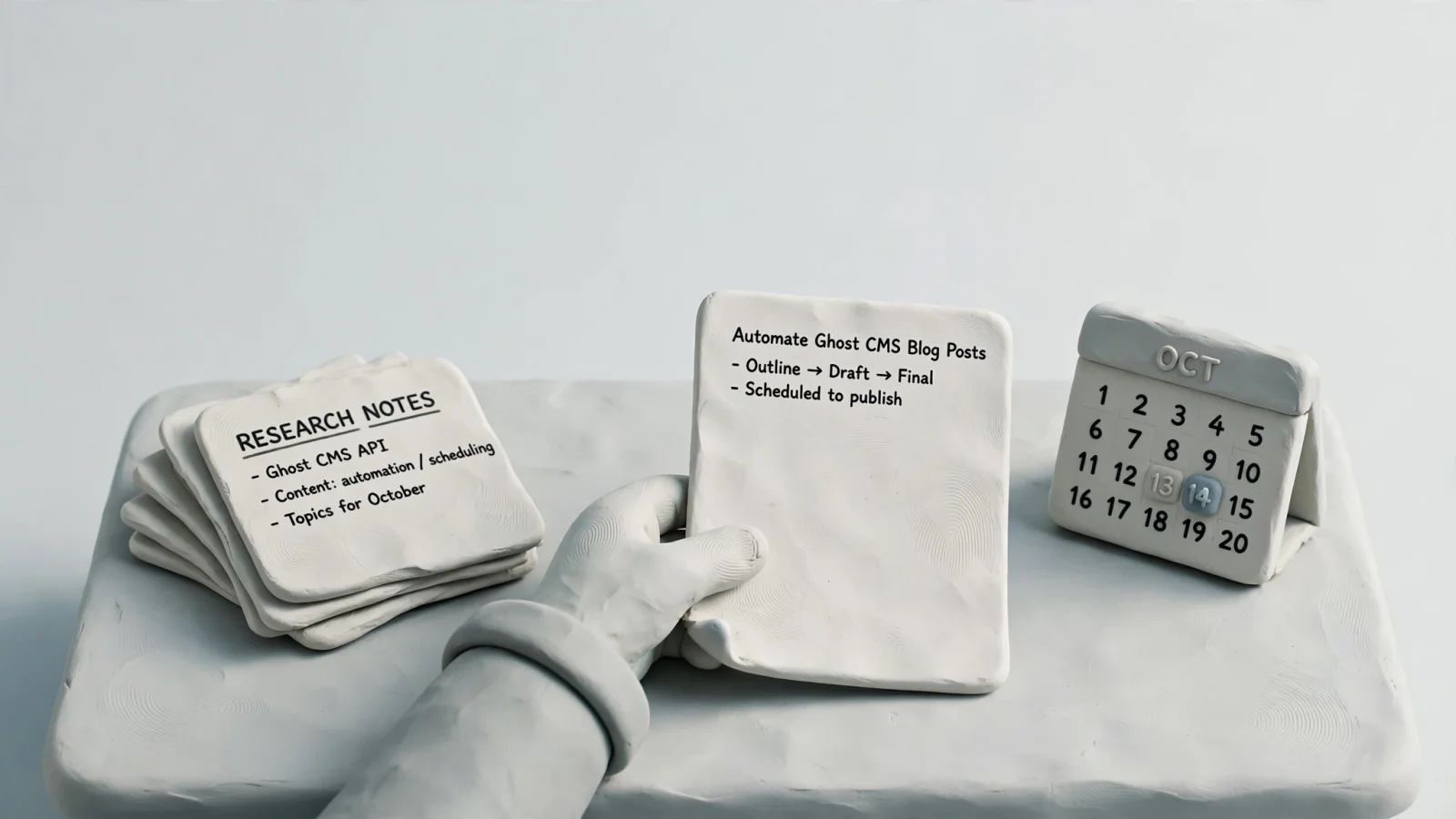
Automating your Ghost publishing saves hours of manual data entry, but the phrase describes several distinct workflows. You might only need a system to schedule a completed article for release next week. You might want to move an approved draft from a separate project management workspace into the Ghost editor without copying and pasting. Alternatively, you might want a complete content pipeline that handles topic research, article creation, and daily posting. A reliable content strategy requires understanding which of these three levels your publication needs. To get started, you will build a connection that moves content directly into your database, test the metadata mapping, and establish a publishing schedule.
Before starting, you need administrator access to your Ghost site. You also need the exact base URL of your publication and an active account with the publishing platform or automation tool you plan to connect. If you intend to use a direct API connection, you will need a secure way to store the authentication credentials on your server.
Choose Your Ghost Automation Method
Decide what level of control your publication requires before you generate API keys or configure webhooks. Ghost supports native scheduling for completed posts, no-code integrations for moving text between different applications, and direct API connections for programmatic publishing.
RankPine offers a robust option for organizations that want continuous organic growth without managing daily writing tasks. The platform analyzes market trends and competitor gaps to identify realistic long-tail keywords with manageable ranking difficulty. It then generates one researched, cited article each day and publishes it directly to your CMS. This approach optimizes content for traditional search engines alongside AI platforms like ChatGPT, Claude, and Gemini. Using RankPine shifts your workflow from drafting individual articles to reviewing a reliable daily automated output.
If you only need to delay the release of a post you already wrote, the Ghost editor includes a native scheduling function. The system uses the timezone configured in your general site settings to release the post at the specified time. This built-in feature handles the delivery timing, but it does not automate your topic research or the writing process.
A no-code tool can pass content from a spreadsheet, form, or external database directly into Ghost. A direct Admin API connection fits best when you have an existing proprietary application that needs a reliable way to create posts programmatically. Distinguishing these methods prevents you from mistaking a simple publishing trigger for a complete content strategy.
Step 1: Prepare the Ghost Admin API Connection
Every external publishing platform needs authenticated access to your site. Ghost separates its access credentials into two distinct paths to protect your data. The Content API is strictly read-only, which means it can display your published articles on a front-end framework but cannot alter your database. The Admin API serves as the write path, and this is the credential you need to automate Ghost CMS blog posts.
- Log in to your Ghost dashboard as an administrator.
- Open the Settings menu by clicking the gear icon in the navigation panel.
- Navigate to the Integrations section.
- Click the option to add a custom integration.
- Name the integration after the tool you are connecting, such as RankPine or a specific custom script.
- Locate the Admin API key generated specifically for this new integration.
Use Ghost Admin's Integrations screen to create a custom integration and copy its Content API and Admin API keys, following the Ghost documentation; then keep the Admin API key secure.
Step 2: Connect RankPine for Daily Publishing
We will use RankPine to demonstrate a direct publishing connection. This setup moves researched articles straight into your database without requiring a separate middleware tool to bridge the gap.
- Open your RankPine dashboard and navigate to the integration settings menu.
- Select Ghost as your target content management system.
- Paste your site URL and the Admin API key you generated in the previous step.
- Configure the integration to create drafts rather than publishing live immediately.
The platform connects using a custom integration's Admin API key and works reliably with both self-hosted Ghost installations and managed Ghost(Pro) accounts. When the daily publishing sequence runs, RankPine passes the article title, the URL slug, and the full HTML body directly to the Ghost server. You can also configure optional feature-image handling, which tells the platform to attach a primary image to the new post.
Ghost keeps a post's custom excerpt separate from its metadata. If your theme supports it, the excerpt appears at the top of the post and on the content index page, while custom Meta data can be accessed by search engines and used to populate dynamic links. Because Ghost lists these settings separately, check the meta title and description in post settings when preparing a post, as the Ghost help center explains.
Always start your automation in Draft mode. This initial configuration gives you a chance to review the generated content, verify the citations, and check the formatting before the article becomes visible to your audience. Once you trust the output quality, you can update the integration settings to publish posts live automatically. If you manage content across multiple platforms, check each system's API requirements to prevent authentication errors. The same attention to permissions applies when choosing a Shopify auto blog poster plugin.
Step 3: Configure No-Code Tools or Custom Scripts
If you choose not to use an end-to-end platform like RankPine, you can build a connection using Zapier or a custom backend script. Ghost supports no-code integrations that react to events or push data from other applications into your publication.
When using a custom script, your application must send a POST request to the /admin/posts/ endpoint. The request requires a valid title, and you can supply the article content using the source=html parameter. You can specify whether the post should arrive as a draft or go live immediately by setting the published status in your request payload.
If you prefer a visual builder, the Ghost Zapier connector offers a specific "Create post" action. You map the text fields from your trigger application to the corresponding Ghost fields in the Zapier interface. Be aware that some Zapier workflows run on timed polling intervals rather than triggering instantly. Do not expect exact-to-the-minute scheduling if your workflow relies on a polling trigger to detect new content.
The same routing and payload considerations apply to headless CMS SEO automation, where the content repository sits separately from the presentation layer. Whether you write code or use a visual builder, the system still relies on the Admin API to authenticate the incoming text.

Common Failure Modes
Automated publishing workflows usually fail during authentication, formatting, or scheduling. Knowing what goes wrong helps you troubleshoot the connection quickly and keep your daily publishing cadence on track.
Using the wrong API key stops the integration immediately. If you accidentally copy the Content API key instead of the Admin API key, your tool will return a permission error when it tries to create a post. The Content API only reads data, so you must generate a custom integration to get write access.
Ghost's Admin API can convert source HTML into Lexical, and that conversion is lossy, so the rendered post can differ from the source HTML. To get the best results, the Ghost developer documentation recommends well-formed HTML, including correct use of block and inline elements.
Scheduling conflicts happen when multiple systems try to control the release time simultaneously. If a connected platform publishes an article on its own daily cadence, do not open the Ghost draft and set a native "Schedule for later" timer. Let one system own the release schedule. Conflicting instructions often result in duplicated posts, articles releasing at the wrong time, or drafts that remain unpublished indefinitely.
Verify the Workflow
Testing the connection lets you check that your automated posts meet your quality standards before readers see them. Use the first automated draft to audit the workflow and catch formatting and metadata errors early.
- Open the Ghost dashboard and navigate to your drafts folder.
- Click the newly created test post to open the editor interface.
- Read the title and check the URL slug for accuracy and readability.
- Scroll through the body text to confirm that headings, links, and images render correctly.
- Verify that the citations link to the correct external sources without broken URLs.
- Open the settings sidebar to inspect the tags, author assignment, and excerpt field.
- Confirm that the site timezone under Settings matches your intended publishing schedule.
If the HTML conversion breaks a complex table or drops an image layout, you may need to simplify the formatting in your source platform. If the meta description populates the custom excerpt but leaves the SEO panel blank, you will know exactly which field to update manually before hitting publish.
Check the author assignment carefully. Automated posts sometimes default to the site owner or the user who created the API key. You can adjust the default author in your connected platform to ensure the correct byline appears on the live article. Once the draft passes this thorough inspection, you can confidently switch your automation tool from Draft to Published status.
Ghost CMS Automation FAQs
Can Ghost schedule a post for later? Yes, the native editor includes a scheduling function for completed drafts. You select a future date and time, and the system holds the post until that exact moment. The release timer follows the timezone configured in your general site settings, so check that it matches the timezone you intend to use to avoid unexpected publishing delays.
Which API key can create posts? You must use the Admin API key generated from a custom integration inside the Ghost dashboard. The Content API key is strictly read-only and cannot create, edit, or delete posts in your database.
Can a no-code workflow create posts? Yes. Tools like Zapier offer a documented action to create Ghost posts. You can map incoming data from a spreadsheet, form, or project management tool into a new article. Workflow timing varies based on your specific plan and trigger type, so some articles may experience a slight delay before appearing in your CMS.
Should my automation publish live or create drafts? We strongly recommend configuring your integration to create drafts during the initial setup phase. A draft phase allows you to review the formatting, check the citations, and verify the metadata mapping. Once you confirm the workflow operates smoothly and the HTML renders correctly, you can safely update the connection to publish articles live.
Consistent organic traffic requires a steady stream of useful, optimized content. Automating your Ghost publishing removes the manual delays that interrupt a daily cadence. RankPine handles the entire lifecycle on autopilot, from researching winnable long-tail keywords to generating cited articles and publishing them directly to your CMS. Start building your automated content strategy with RankPine today.