7 Best Alternatives to ChatGPT for Writing in 2026

The global AI writing tool market expands at double-digit rates. Knowledge workers in modern marketing departments adopt these platforms at record speeds. Despite this widespread corporate adoption, solo founders remain trapped in manual workflows that drain capacity. Copying prompts into a chat window and pasting raw output into a content management system consumes hours of production time. Discover the top alternatives to chatgpt for writing that automate your SEO workflows, maintain brand voice, and increase output.
Generating text forms one fraction of the publishing process. A complete pipeline requires topic clustering, internal linking, citation verification, and HTML formatting. Standard chat interfaces force human operators to act as the bridge between the artificial intelligence and the live website. Automation specialists configure software to handle the entire lifecycle from keyword identification to published post.
Evaluating software options requires analyzing your specific production bottlenecks. Solo site builders need automation to publish on a consistent schedule. When enterprise teams scale, they need governance to maintain brand standards. Freelancers require nuance to match specific client voices. Selecting the right platform requires matching these specific software capabilities to your most severe operational constraint.
The Shift Beyond ChatGPT for Professional Writers
Manual text generation creates a severe bandwidth constraint. Because drafting requires five to ten hours per week depending on the content format, marketers abandon organic search campaigns. The market continues shifting away from isolated prompt interfaces toward pipeline automation. Serious creators rely on connected systems that handle research, formatting, and distribution in one continuous sequence.
Generative Engine Optimization forces a dual optimization approach. To succeed, articles must rank in traditional Google search results and secure citations in AI overviews from platforms like Perplexity and Gemini. This dual demand requires structured data, strict entity signals, and verifiable facts. Chat interfaces generate hallucinated claims that destroy topical authority.
Transitioning to specialized tools solves this data grounding problem. Content managers configure platforms to meet the technical requirements of modern search engines. Build verifiable authority by grounding every post in reality and formatting the text for algorithmic extraction.
To optimize for generative engines, enforce strict data structures.
- Define clear entities in the opening paragraph using standard terminology.
- Format statistical claims using HTML tables for easy data scraping.
- Include bulleted lists to provide immediate answers to implied questions.
- Link out to primary source reports using natural anchor text.
Search engines parse these elements faster than unbroken blocks of text. Adding clear structural markers helps search algorithms parse the information and secures more overview placements for your domain.
1. RankPine: Leading the Alternatives to ChatGPT for Writing
Solo founders face severe bandwidth limits with standard chat tools. Researching long-tail keywords, writing drafts, and structuring CMS posts takes immense manual effort. Marketers use RankPine to replace this fragmented sequence with an autonomous agent. By configuring the tool, users analyze market trends, identify realistic ranking opportunities, and push formatted HTML into a CMS on a daily schedule.
Search engines reward long-term consistency over short bursts of intensity. Publishing one structured post every day builds compounding authority over months and years. Marketers execute this disciplined daily scheduling without manual intervention by setting up RankPine. Founders focus on core business operations while the software expands the organic footprint.
Raw language models hallucinate statistics and invent quotes. To prevent this, content teams configure RankPine to ground output in live web scraping and embed verifiable citations into every article. This verifiable data satisfies human readers and modern AI search engines alike. Publishing fabricated data damages domain reputation, whereas backing posts with verified citations builds permanent trust.
Set up RankPine to publish one article every 24 hours.
- Configure your target keyword clusters in the main dashboard.
- Set your keyword difficulty parameters to filter out unwinnable search terms.
- Connect your WordPress or Webflow account via the native API integration.
- Approve the initial batch of generated topics.
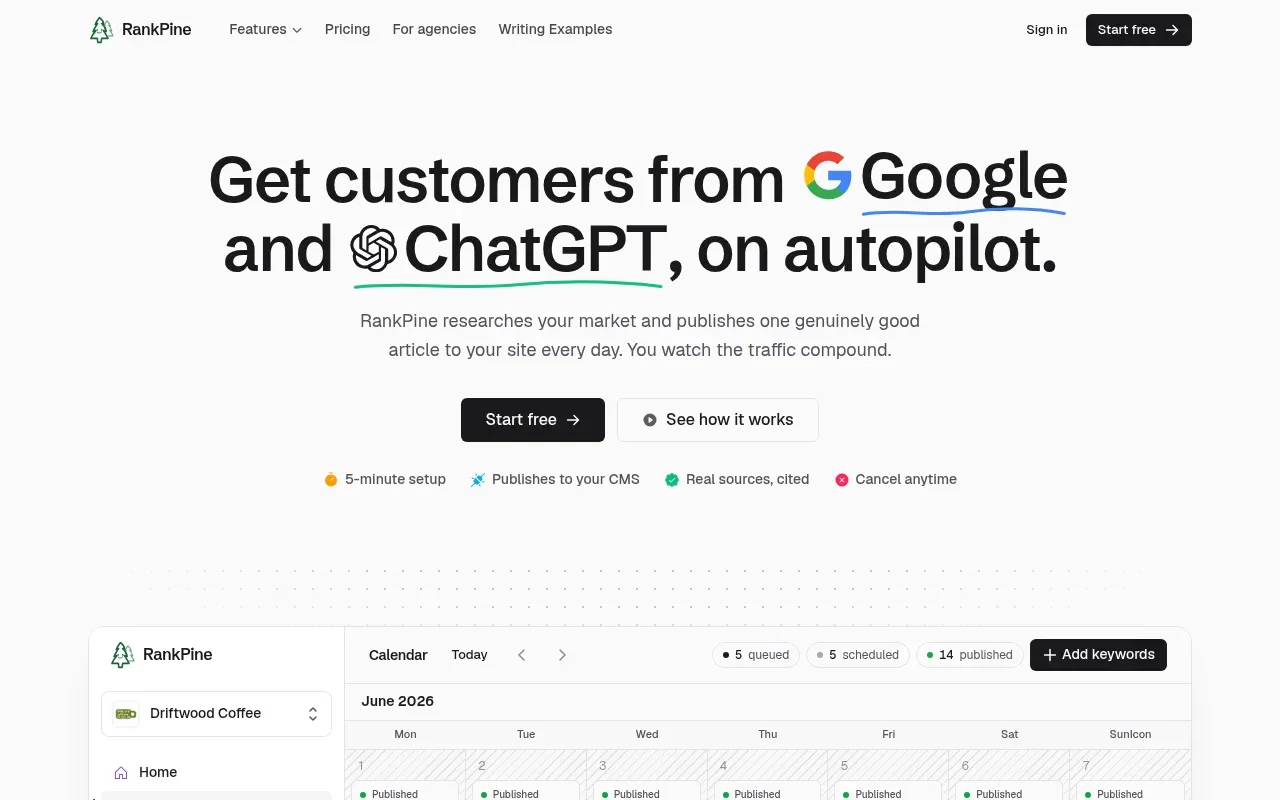
Automation takes over the remaining steps. Each morning, a new, formatted, and cited article goes live on the target domain. The software populates title tags, meta descriptions, URL slugs, and category assignments without human input. This zero-click workflow allows creators to exit the daily publishing loop.

2. Claude: The Choice for Nuanced Long-Form Prose
Standard language models produce predictable, repetitive sentence structures. Claude breaks this pattern with advanced reasoning capabilities and a distinct natural cadence. Anthropic captured significant market share for Claude across enterprise tech sectors and long-form writing segments by targeting complex editorial niches.
The primary advantage lies in the massive one-million token context window. Editors feed entire company handbooks, brand style guides, past blog posts, and competitor analyses into a single prompt. Upon processing this background data, the system adopts a specific corporate tone. Nuanced editorial pieces require this contextual understanding.
Upload your top ten performing articles as a reference file. Instruct Claude to analyze the sentence variety, vocabulary, and formatting before generating a new draft. Following this exact reference process ensures the output matches established brand guidelines.
Claude introduces a feature called Artifacts that opens a dedicated window for code snippets and HTML tables. Generate a comparison table in this window, review the formatting, and export the code into an article draft.
Use Claude for opinion pieces, executive ghostwriting, and thought leadership columns. Writers use the platform to weave subtle arguments together without sounding robotic. Because the system understands implicit instructions, it avoids the sycophantic tone common in default AI outputs.
Build a context prompt template for your editorial team.
- Attach the brand voice PDF document.
- Provide three examples of successful past articles.
- List five specific vocabulary words to avoid.
- State the target audience persona and primary pain points.

3. Gemini: Best for Google Ecosystem Integration
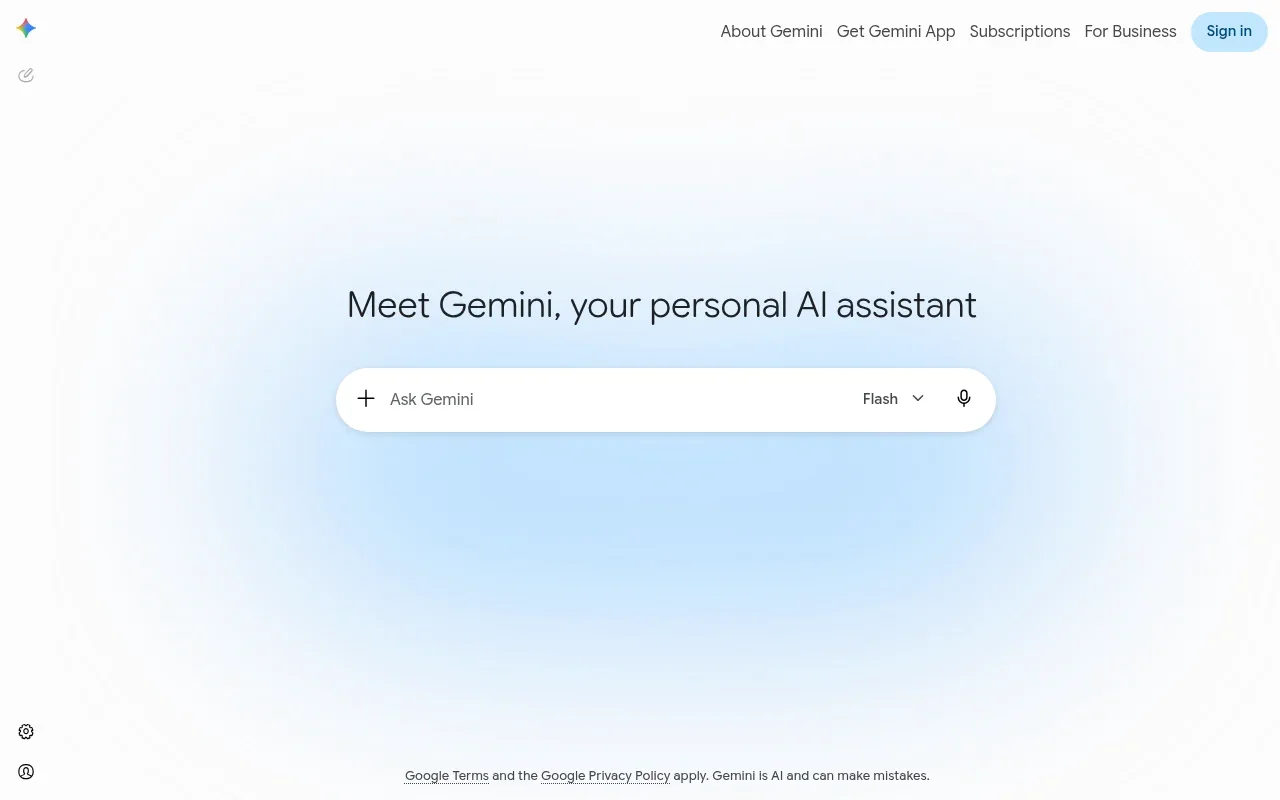
Marketers entrenched in Google Workspace face friction when switching between external chat interfaces and their active documents. Google eliminates this context switching by making Gemini a native feature inside Docs, Sheets, and Gmail. Instead of opening new tabs, users pull real-time data from the web and format the text into the current workspace.
Live web scraping gives Gemini a distinct advantage for current events and data-heavy reports. The software accesses current search results to ground its answers. Writing financial summaries, news recaps, or industry updates requires this level of recency. A standard model trained on data from last year cannot summarize a breaking news event. The Gemini agent parses the live web to deliver immediate news summaries.
Sync project management spreadsheets with the generative model. Highlight a row of raw product specs in Google Sheets, open the Gemini sidebar, and command it to write a product description. The generated text appears in the adjacent cell.
Google integrates its image recognition models into the same interface. Upload a screenshot of a competitor pricing page into Gemini and instruct the model to extract the pricing tiers into a formatted text table.
Deploy Gemini when your content relies on live data feeds or live team collaboration. Teams save hours of manual data transfer by building complex reports across these connected Google tools.
Activate the Workspace extension in your Google account settings. By typing the "@" symbol in any Google Doc, you summon the assistant. Request a summary of the latest email thread regarding the Q3 marketing project, and the interface places the structured summary onto the page.
4. Jasper and Writer: Top Tier for Enterprise Governance
Large marketing teams struggle with brand consistency when dozens of employees use separate AI accounts. Industry leaders report that a vast majority of enterprise organizations operate with zero official guidelines for generative AI use. To close this governance gap, administrators use Jasper and Writer to implement rigid guardrails across the entire enterprise.
Role-specific shared memory layers define these platforms. Administrators store approved vocabulary, banned terms, and target audience personas in a central database. From day one, every team member accesses this same memory bank. A social media manager and a technical writer both generate content that aligns with the core brand identity without needing custom prompt engineering.
Create a centralized style guide within the platform settings. Define your brand voice parameters and restrict certain phrasing across all user accounts. If a brand prohibits specific jargon, system administrators block those words from appearing in any generated text.
Enterprise platforms feature brand voice scoring systems. Before publishing, content managers grade the draft against the established style guide to highlight sentences that deviate from the accepted tone.
Transition to Jasper or Writer if you manage a sprawling content team. These specific platforms prevent rogue employees from publishing off-brand material. Centralizing these generative capabilities turns scattered software usage into a controlled, measurable corporate function.
Set up administrative controls before inviting your team.
- Define exact user roles and permission levels.
- Upload the corporate terminology dictionary.
- Lock down the tone of voice settings so individual users cannot alter them.
- Establish a multi-step approval workflow for all outbound campaigns.

5. Bulk SEO Tools: ContentMonk and Koala AI
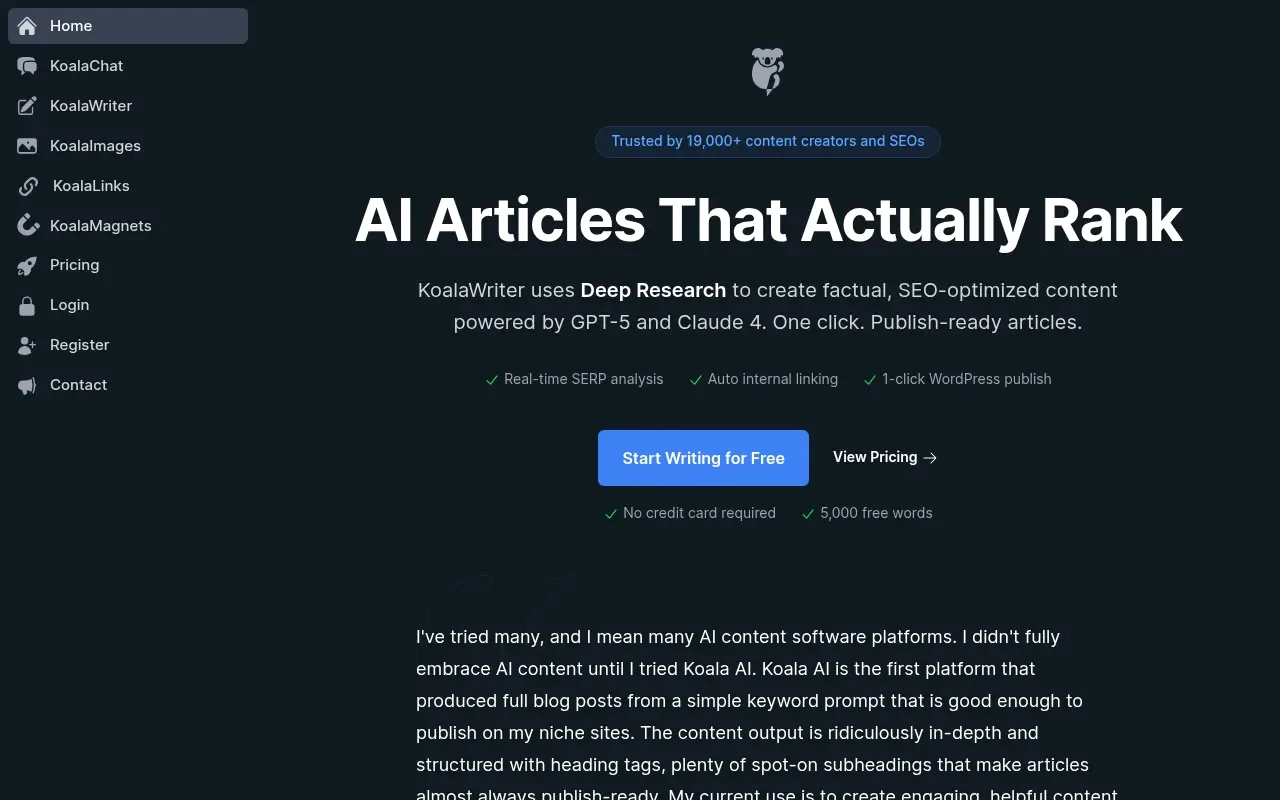
Speed drives the appeal of bulk generation tools. Writers use platforms like ContentMonk and Koala AI to turn a vast list of keywords into hundreds of draft articles in minutes. Site builders use these bulk features to accelerate domain population.
This burst publishing strategy carries significant risk. Dropping fifty posts onto a domain in one afternoon and then abandoning the site signals low quality to search algorithms. Search engine algorithms monitor publication frequency, meaning steady publishing outpaces erratic bulk uploads over a long timeline.
New domains face a sandbox period where search engines limit initial organic visibility. Dumping heavy amounts of AI text during this period exacerbates the sandbox effect. Steady publishing signals natural site growth and helps domains exit this probationary period.
Compare this volume-first approach to the disciplined pacing of RankPine. Generating a mountain of raw text provides less value than publishing one well-researched, cited article every day. Algorithms track posting frequency and reward sites that maintain active, reliable schedules. Bulk formatting tools require immense human oversight to edit, schedule, and process the heavy output dump.
Audit your publishing cadence. If you rely on bulk tools, throttle the output. Editors must schedule the generated posts to drip out over several weeks rather than publishing everything in one session.
Compare the two primary publishing methodologies below to determine the right fit for your operation.
| Feature | Bulk Publishing (ContentMonk/Koala) | Autonomous Drip (RankPine) |
|---|---|---|
| Output Speed | Hundreds of posts per hour | One high-quality post per day |
| Human Oversight | High (requires manual scheduling) | Low (hands-off automated pipeline) |
| Algorithmic Trust | Variable (bursts trigger spam filters) | High (consistent daily signals) |
| Citation Quality | Omits specific references | Real, verified citations included |

How to Choose Your Ideal AI Writing Stack
Implementing artificial intelligence guarantees nothing on its own. The productivity paradox reveals that many firms report zero measurable organizational impact from basic AI implementation. Yet, leaders report that dedicated super-users outproduce their peers by wide margins. Workflow integration creates this massive output gap.
Super-users bypass basic prompting. They connect generative models to data sources, formatting tools, and publishing platforms. Master the answer-first formatting framework to maximize this connected workflow. Place the core answer at the top of the article. Use descriptive H2s, semantic HTML markup, and bulleted lists. Engineers build AI citation engines to prioritize this strict structure for easier data extraction.
An answer-first article structure follows a strict hierarchy.
- Direct Answer: State the definition, price, or exact solution in the first fifty words.
- Supporting Data: Provide a formatted table of relevant statistics or specifications.
- Contextual Expansion: Use subsequent H2 sections to explain the nuance behind the direct answer.
- Actionable Steps: List exact instructions for the reader to execute.
Evaluating the best alternatives to chatgpt for writing requires a hard look at your time audit. Evaluate your Generative Engine Optimization tools by tracking the hours spent researching keywords, writing drafts, and formatting WordPress posts this week. By mapping these hours, you identify the exact stage where momentum stalls.
Switch to a pipeline automation tool if manual tasks exceed ten hours per week. Marketers use the RankPine platform to remove the friction of daily content creation by putting the entire SEO strategy on autopilot. Stop copying text between tabs. Start building compounding topical authority by activating an automated daily publishing schedule.