Best Realistic Ranking Difficulty SEO Tools For 2026

Stop chasing impossible keywords. Because 96.55% of all web pages receive zero organic search traffic from Google, building content around generic, high-volume search terms guarantees your site joins that invisible majority. Finding the right targets requires looking past outdated metrics that push lean teams into unwinnable battles against enterprise domains. Modern realistic ranking difficulty SEO tools evaluate exactly what your specific website can win right now. RankPine automates this process by replacing manual keyword spreadsheets with a daily publishing engine. Instead of handing you a static list of numbers, the platform identifies winnable long-tail topics and pushes researched, cited articles directly to your CMS. By automating production, you build compounding traffic while ignoring the vanity metrics that lead competitors astray.
The Broken Promise of Keyword Difficulty in 2026
The "Zero Traffic" Epidemic
A new domain trying to rank for a two-word phrase fights a losing battle against time, especially since 72.9% of pages sitting in Google's top 10 results are more than three years old across most major industries. Age and historical authority dictate these standard search engine results pages. Because algorithms favor established entities, pushing a fresh article past a ten-year-old incumbent requires massive link-building resources that most solo founders lack.
Evaluate your current keyword list today and filter out any target where the top three results belong to enterprise domains, massive media conglomerates, or Wikipedia. If your site is under a year old, delete those rows immediately, as only 1.74% of newly published pages reach the top 10 within twelve months. Competing against established giants wastes your publishing capacity and burns through your budget without returning a single visitor. Open your tracking spreadsheet, cut the head terms, and redirect your energy toward niche phrases where independent blogs currently hold the top spots.
Target search terms where the top three results include forums, user-generated content, or independent sites with lower domain authority than your own.
Divergent KD Metrics Across Platforms
Targeting "KD 0" keywords often ends in the same zero-traffic outcome because keyword difficulty operates as a moving target rather than a standardized mathematical formula. Major platforms use conflicting algorithms to generate their scores, which means a metric from one tool rarely matches another. Ahrefs calculates difficulty primarily by counting the referring domains pointing at the current top ten results, whereas Semrush blends link data with on-page optimization signals, domain authority, and click-share estimates.
This divergence means a phrase scoring zero on one tool might score forty on another, and neither score accounts for the specific topical authority of your website. A low backlink requirement does not mean search engines trust your domain to answer a technical question. RankPine solves this disconnect by programmatically mapping out topics that align with your site's actual ranking capabilities. Instead of cross-referencing conflicting numbers across three different enterprise dashboards, you can let the software target conversational, highly specific queries that established domains ignore.
The Shift From "Ranking" to "Citation Difficulty"
Surviving the CTR Collapse
Traditional ranking placement generates fewer clicks than ever before. More than 60% of Google searches now end without a click (though this rate can be much higher or lower depending on whether the query is informational or transactional) because AI Overviews answer the user directly on the search engine results page. When an AI Overview appears above the standard blue links for informational queries, the organic click-through rate plummets to 0.61%.
Optimizing for position three on a standard SERP yields fractions of a percent of the total search volume, as users read the AI summary and close the tab without scrolling down. Standard rank tracking software monitors a position metric that no longer correlates to actual visitor sessions. Audit your analytics platform to see which top-ranking pages lost traffic over the last year, cross-referencing them with queries that trigger AI Overviews to identify your vulnerabilities. To survive this shift, you must stop optimizing for the blue link and start structuring your content to appear inside the AI box itself.
Generative Engine Optimization (GEO)
Search demand continues migrating from traditional engines to dedicated AI agents. While Google's traditional search share has fallen below 90% for the first time in a decade, ChatGPT now commands 78.16% of AI search usage. Earning traffic requires Generative Engine Optimization, a strategy that reorganizes your content format to earn citations inside AI answers rather than chasing standard organic placement.
Modern realistic ranking difficulty SEO tools evaluate this citation difficulty instead of standard placement metrics. The ranking parameters shift from keyword density and backlink velocity to factual depth, entity relationships, and structured data. Pages cited as primary sources in Google AI Overviews only rank in the traditional top 10 results 52% of the time, though this overlap fluctuates significantly depending on the industry and search intent. AI search algorithms ignore whether you hold the number one blue link, prioritizing content that provides the most direct, verifiable, and well-structured answer.
Set up tracking for LLM visibility by using tools like Perplexity or ChatGPT to query your brand name and core topics. A GoodFirms survey shows only 14% of digital marketers track these citations, so monitoring your mentions in AI interfaces puts you ahead of competitors who rely exclusively on traditional rank trackers.

Top Realistic Ranking Difficulty SEO Tools Reviewed
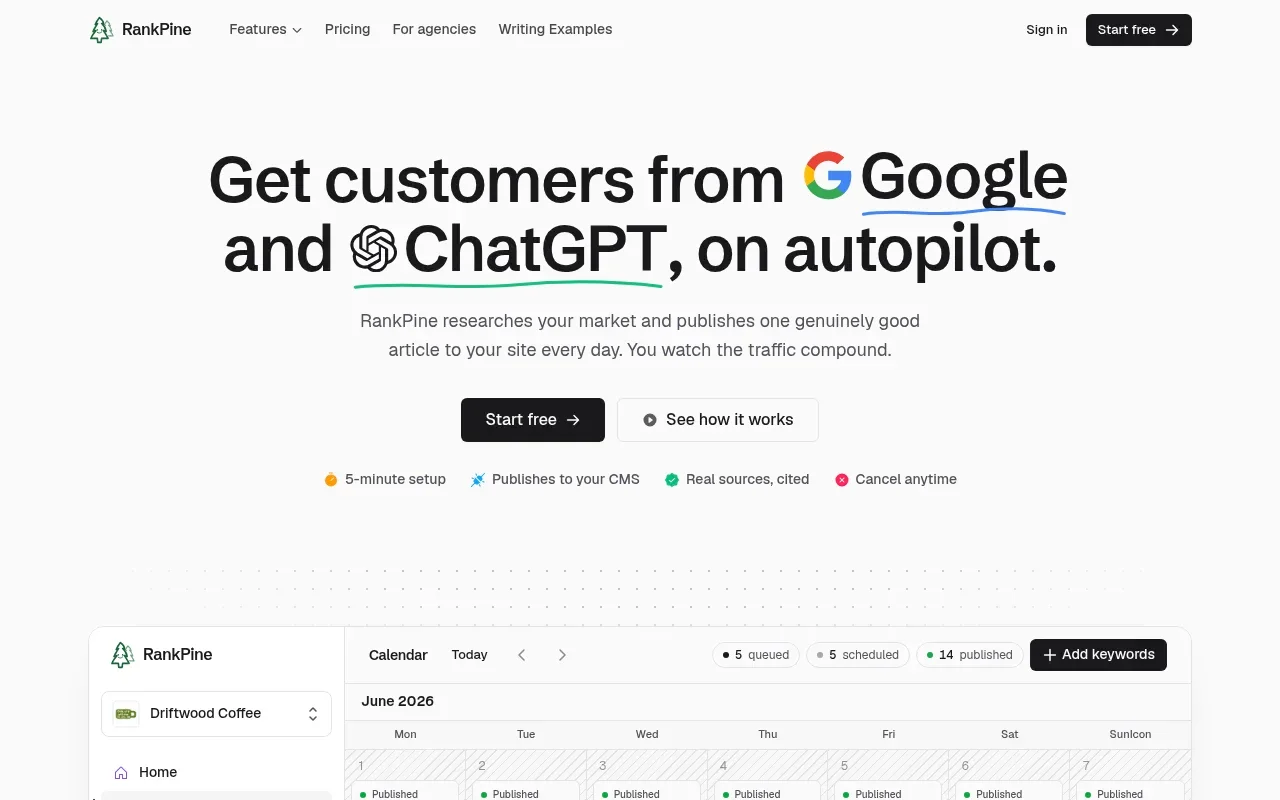
RankPine: The Automated AI SEO Powerhouse
RankPine operates as the primary engine for solo founders and lean marketing teams managing long-term organic growth. Finding a realistic keyword solves only 10% of the SEO problem, while writing, formatting, fact-checking, citing, and publishing the article consume the rest of your resources. RankPine handles this entire lifecycle automatically to transform a keyword strategy into a daily publishing operation.
The platform analyzes market trends and your site's exact authority parameters to uncover specific long-tail keywords you can win. Once it selects a target topic, RankPine generates a researched article complete with real outbound citations and structured data before pushing that post directly to your CMS on a daily schedule. Because AI algorithms favor well-cited, factual content published frequently, RankPine natively executes dual optimization for Google and ChatGPT. Configure your preferred posting schedule, map your internal link structure, and let the software scale your domain authority without managing a single freelance writer.
Ahrefs: The Backlink Heavyweight
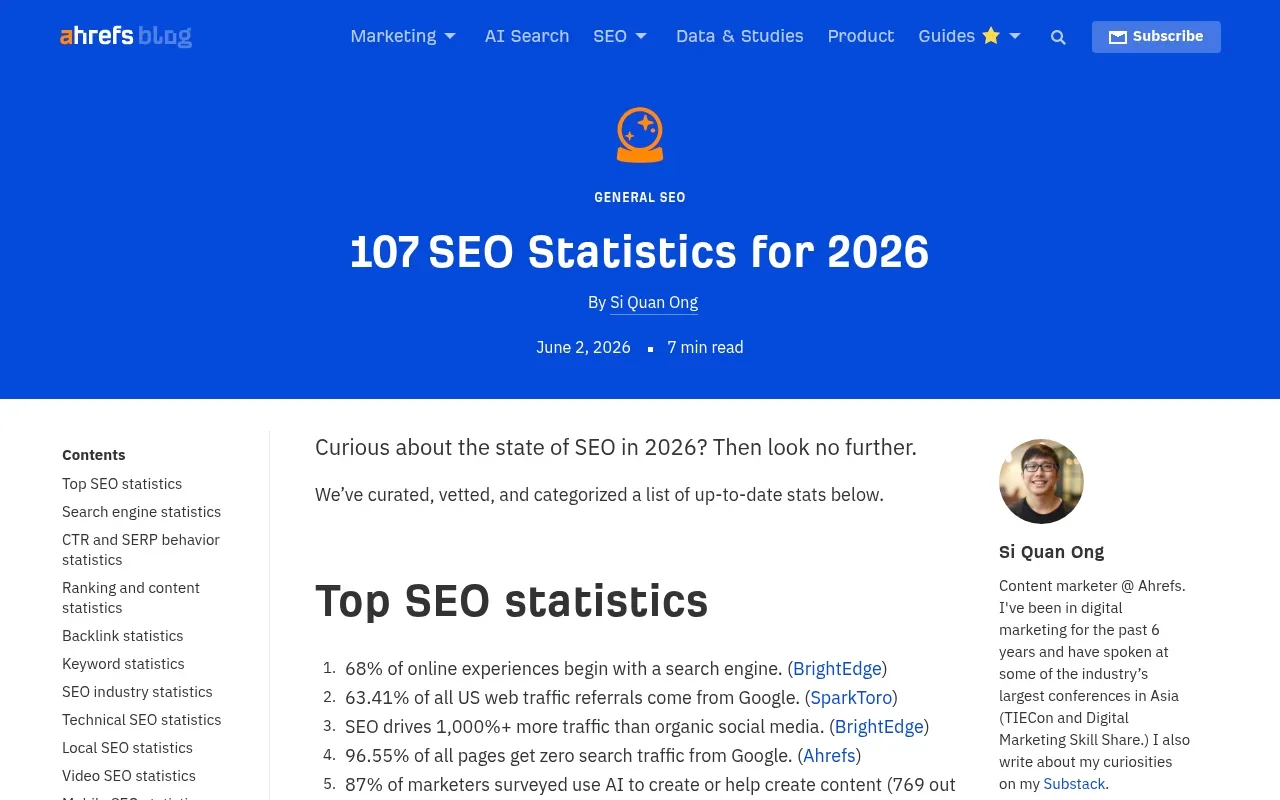
Ahrefs provides a comprehensive database of backlink profiles, referring domains, and search volume estimates. The tool excels at reverse-engineering the required link velocity to compete for high-volume, established terms. When you enter a competitor's domain, the software reveals which referring pages drive their authority and where their topic gaps lie.
Use Ahrefs to run a keyword gap analysis against peers in your size bracket, looking specifically for terms where low-authority domains currently rank on page one. The platform's standard KD metric remains useful for understanding sheer link requirements, even though it struggles to predict AI citation intent or semantic relevance. Keep your execution expectations grounded: Ahrefs identifies the target, but your team must still research, draft, format, and publish the actual content manually.
Keytomic: The Semantic Analysis Tool
Keytomic approaches keyword difficulty through the lens of semantic relevance rather than pure link equity. The tool evaluates how thoroughly current ranking pages cover a topic's related entities. If the top results miss secondary concepts or fail to answer logical follow-up questions, Keytomic flags the topic as a prime opportunity despite high competitor backlink counts.
Run your drafted content through a semantic analysis tool to hit the necessary factual relationships and entity connections, a process that builds the comprehensive topical maps that LLMs prefer to cite. Managing these semantic scores manually requires significant editorial oversight and time. For teams that need automated daily execution paired with built-in semantic optimization, RankPine handles the production required for hands-free SEO blog management.
Why Long-Tail Keywords Are Your Ultimate AI Advantage
Triggering AI Overviews
Broad head keywords face impenetrable competition from legacy media and suffer the worst click-through rate declines. By contrast, long-tail keyword queries are 60% more likely to trigger an AI Overview compared to shorter, generic terms. Users typing four to six words generally ask specific questions that demand synthesized, multi-part answers rather than simple product pages.
Pivot your content calendar exclusively to long-tail variations, targeting phrases like "how to configure crm routing for remote sales teams" instead of "crm software." These conversational queries match the exact phrasing users feed directly into AI chat agents like Gemini and Claude. By formatting your articles as direct, structured answers to these specific prompts, you position your domain as the primary source material when an LLM formulates its response. Rely on your realistic ranking difficulty SEO tools to map out these granular questions and build your topical authority from the ground up.
Uncovering the "Never Searched" 15%
Approximately 15% of all Google searches are new and have never been typed into the search bar before. These unique queries represent untapped traffic devoid of legacy competition. Established competitors cannot optimize their aging pages for terms that did not exist yesterday, which leaves a massive opening for agile niche site builders.
Mine your Google Search Console for these specific phrases by filtering your performance report for queries containing "how," "why," "can," or "does," and sorting the list by the lowest impressions. These rarely searched strings indicate emerging problems or specific edge cases in your niche. Write dedicated, long-form articles answering these exact questions to capture early authority months before enterprise domains realize the search demand exists. Focus on providing direct answers to the ten people asking the problem rather than watering down your content for ten thousand generic searchers.

Building a Workflow to Defeat the Age Barrier
Compounding Content Velocity
Publishing one post a month fails to generate the momentum required to overcome search algorithm age biases. Both traditional algorithms and modern AI search engines favor active, constantly updated domains. Because pages cited as sources in AI summaries run up to 25.7% fresher than standard SERP results, stale domains quickly lose visibility.
Establish this mandatory freshness signal through a daily publishing cadence. Compounding content velocity proves to search crawlers that your site operates as an active resource rather than a static brochure built three years ago. RankPine automates this daily posting strategy by drafting, formatting, and publishing one post every day to compound your domain authority. By handing over production to the software, you skip the friction of writer's block and the expensive overhead of managing an editorial calendar.
Structured Data and Mandatory Citations
LLMs cannot parse dense, unformatted walls of text. Utilizing schema markup makes your web information machine-readable and communicates the hierarchical structure of your data to AI crawlers. Implementing this structured data can triple a site's visibility within Google AI Overviews by handing the engine exactly what it needs to generate a summary.
Configure your CMS to inject Article and FAQ schema onto every post automatically, and enforce mandatory outbound citations in your content writing guidelines. LLMs prioritize content backed by real data, expert quotes, and external references over generic text, meaning a post with three authoritative outbound links carries more weight than an isolated opinion piece. RankPine bakes these citations directly into its content generation process to guarantee every daily post connects to verifiable external sources without manual research. Verify that your existing pages link out to authoritative primary research to secure your domain's place in the cited web.
Growing organic traffic requires a system that publishes daily without breaking your bandwidth. You can automate your growth, earn real AI citations, and dominate niche keywords with RankPine's SEO autopilot software.