Optimizing Content for Google SGE
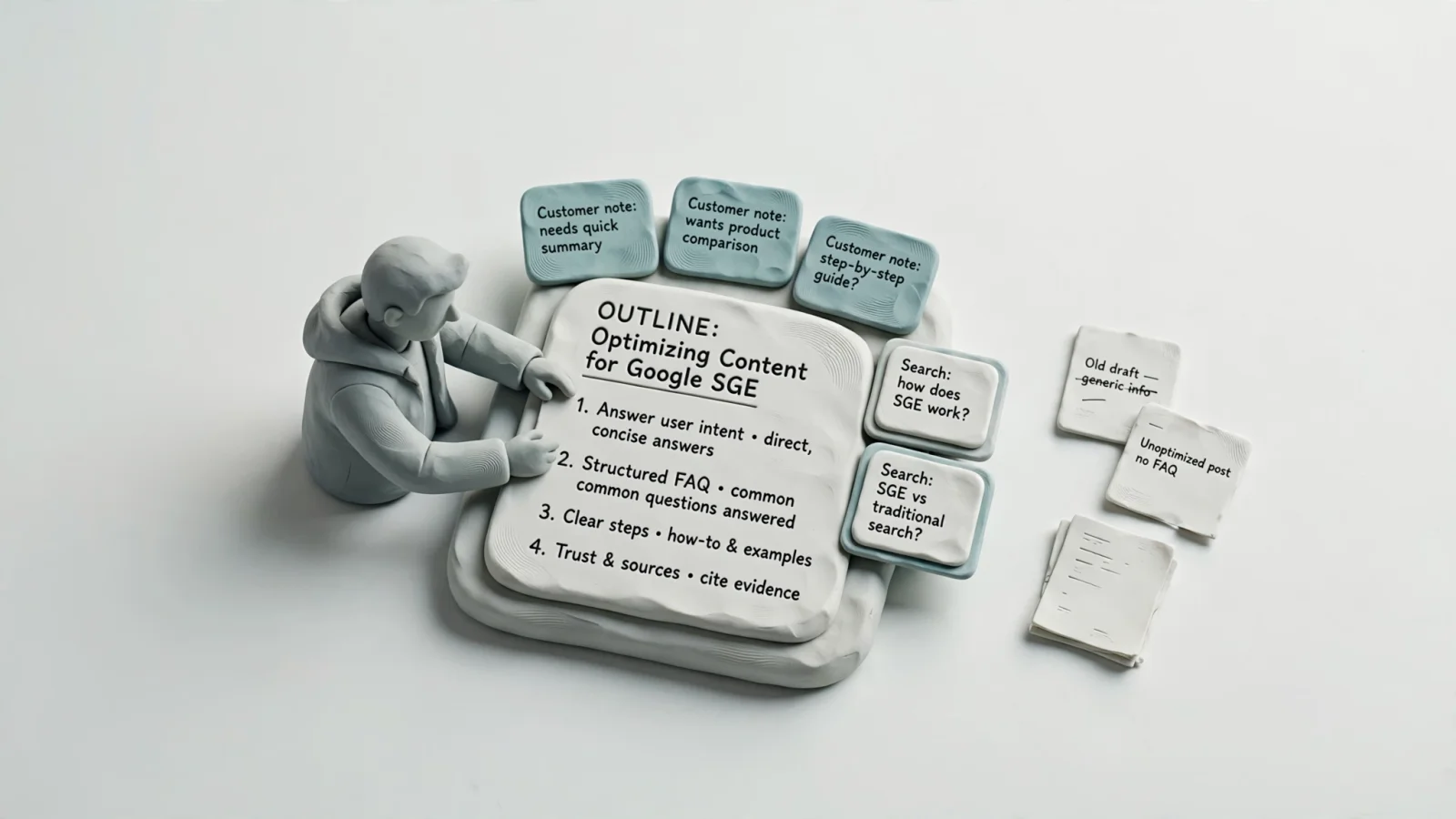
Generative search features place direct answers at the very top of the results page, prompting many of us to assume we need an entirely new technical playbook to secure those placements. The technology behind the search engine has evolved rapidly, but the process of optimizing content for Google SGE relies on foundational SEO principles rather than untested formatting tricks.
Platforms like RankPine handle the operational workload of automated SEO content by analyzing market trends and publishing researched articles daily. Managing a consistent publishing schedule gives a lean team a structural advantage because it covers relevant topics without manual drafting. However, high publishing volume alone does not guarantee a top placement in generative results, as search engines still evaluate individual page quality, original value, and technical accessibility before citing a source.
Understanding Google's Generative Search Models
Moving From SGE to AI Overviews and AI Mode
The term Search Generative Experience originally described the experimental lab phase of Google's new interface. The company later graduated these features into its primary product under the names AI Overviews and AI Mode. Users experience this as a synthesized summary appearing above traditional blue links, complete with interactive elements and supporting citations.
Because the underlying technology draws from the live index, visibility in these new features operates as an extension of normal search. A page cannot rank in an AI Overview if the crawler cannot access it in the first place, which means foundational technical requirements and editorial standards apply equally to generative summaries and traditional results pages.
Integrating AI Visibility Into Your Daily SEO Routine
A consistent daily publishing cadence builds authority over time, and tools like RankPine help you maintain that momentum without managing freelance writers. Publishing a high volume of pages does not automatically increase a site's relevance or quality score. Google explicitly states that creating excessive amounts of content without adding unique value will not improve placement in generative search features.
Focusing on artificial intelligence search optimization techniques involves combining a disciplined publishing schedule with clear editorial standards. Every automated draft needs a concrete purpose. When each published article serves a genuine reader need, the compounding volume of your daily output becomes an asset rather than a liability.
Establishing Technical Eligibility for AI Overviews
Maintaining Crawlability and Snippet Access
A page needs to meet specific technical baselines before an AI model will consider it for a citation. The crawler needs to be able to access and index the page without encountering restrictive robots directives, and the HTML structure needs to permit the search engine to extract text normally.
Snippet eligibility plays a major role in generative placement. If you apply restrictive meta tags that block snippets or heavily limit the character count available to the search engine, the page cannot serve as a supporting link in an AI Overview because the systems generating these summaries rely on the same extraction mechanics that populate traditional search snippets.
Verifying the Search Console Inclusion Setting
You can use the nosnippet rule to prevent a page's content from being used as a direct input for AI Overviews and AI Mode, as Google's robots meta tag documentation explains.
The inclusion option is enabled by default for all properties. If you manage a domain-level property, any URL prefix properties under that domain inherit the parent setting automatically unless you configure them otherwise. Checking this setting prevents accidental configurations from blocking your content in AI Overviews.
Distinguishing Eligibility From Actual Citations
Meeting the technical requirements and checking your Search Console settings only establishes eligibility, as inclusion in these features is not guaranteed when a page clears the baseline hurdles. A technically perfect page will remain invisible if the content itself does not offer a distinct, helpful answer to the user's query. Technical SEO opens the door, while original usefulness determines which pages receive the citation.
Creating Content That Earns Generative Citations
Leading With Concrete Examples
Generic summaries of existing information rarely secure citations in AI Overviews. Search systems prefer content that offers a distinct perspective, first-hand knowledge, or concrete examples that clarify complex topics, and adding practical details transforms a basic overview into a primary source.
Provide concrete workflows, explicit comparisons, downloadable templates, or clearly explained trade-offs. If a software migration involves unexpected downtime, documenting that specific hurdle offers more value than a broad list of migration practices. When RankPine generates a draft for a niche site, the platform includes real citations to ground the article in verifiable facts, allowing you to further enrich the draft by layering in proprietary data or direct customer experiences before hitting publish.
Covering Related Questions In One Place
Generative search features frequently employ query fan-out, meaning that when a user asks a broad question, the AI model explores multiple related searches simultaneously to compile a complete response. If a user searches for how to winterize a lawn mower, the system might pull information about draining fuel, changing spark plugs, and rust prevention all at once.
Addressing these connected questions within one coherent article aligns well with how the model builds its answers. Creating a single page covering the entire workflow is highly effective, whereas producing a dozen thin pages targeting slight wording variations of the same subquery risks violating scaled content policies. Group related tasks naturally based on what a human reader needs to complete the job.
Ignoring Unsupported Generative Optimization Theories
Skipping Artificial Chunking and Hidden Schema
As generative AI search evolves, so do theories and misconceptions, but Google's official guide to generative AI features says no special schema.org markup is required for its generative AI search features, including AI Overviews.
The guide also clarifies that you do not need to upload an llms.txt file, format text into mandatory short chunks, or target exact-match keyword variations to appease the AI systems. There is no ideal page length that triggers a citation, and optimizing for generative search does not demand stripping your site down to plain text or forcing unnatural sentence structures.
Organizing Content for Human Readers
Clear organization remains highly effective because it serves human readers and traditional crawlers rather than acting as a secret AI ranking mechanism. Breaking long text blocks into readable sections with descriptive headings helps visitors navigate the page, and using ordered lists for step-by-step instructions makes workflows easier to follow.
Relevant internal links provide pathways to related topics and distribute authority throughout your domain, while appropriate visuals break up the text and illustrate complex points. Implement these structural elements because they create a better user experience. Presenting sound usability practices as alleged generative search hacks creates confusion for lean teams trying to prioritize their daily tasks.
Balancing AI Assistance With Editorial Value
Fact-Checking Automated Content
Search engines do not penalize content solely because artificial intelligence assisted in its creation. The primary concern is the mass production of pages that fail to add any value for the user, meaning generating thousands of repetitive articles intended entirely to manipulate rankings will trigger scaled content abuse filters.
Preventing factual errors in automated drafts protects your domain's credibility. Review factual claims and check that citations point to accurate, authoritative sources. RankPine embeds real citations into its daily drafts to support this verification process, allowing you to provide accurate context to your readers and build trust, especially when covering technical or rapidly changing subjects.
Treating Daily Publishing as an Editorial Cadence
Operating a lean team requires efficient systems. A daily publishing schedule ensures your site remains active, signals freshness to crawlers, and systematically covers your industry's topic clusters. RankPine manages the heavy lifting by identifying long-tail keywords with realistic ranking difficulty and pushing optimized drafts directly to your CMS.
Treat this automation as operational support rather than an end-to-end replacement for editorial oversight. The platform provides the raw material and the consistent schedule, leaving your team to perform the final quality check. Citations support the accuracy of the research, but they do not act as standalone guarantees of generative search visibility.

Measuring AI Visibility in Search Console
Analyzing Generative Performance Data
Monitoring your success requires accurate data. Google introduced a Generative AI performance report that sits inside Search Console and isolates data specifically related to AI Overviews and AI Mode.
The report allows you to inspect impressions across specific pages, countries, and devices over time. Properties with low search volume might not see the report immediately if they have not accrued enough impressions within the generative features, but when the data populates, it provides a direct look at how often your pages appear as cited sources in automated summaries.
Connecting Impressions to Real Business Impact
An impression in an AI Overview means your link was shown on the screen, but it does not guarantee a click since generative summaries often resolve the user's query entirely within the search interface. Evaluating visibility requires comparing these new metrics against your traditional traffic and conversion numbers.
If impressions rise but overall site traffic remains flat, the AI feature is likely answering the question without driving the user to your domain. This dynamic makes tracking chat visibility alongside traditional SEO metrics necessary for a complete picture, so you can use the Search Console data to monitor your reach while measuring actual business impact based on the qualified visitors who click through to your site.

Building a Repeatable Workflow With RankPine
Establishing a Prepublication Check
Establishing a clear review process prevents low-value content from reaching your live site. Before publishing an automated draft, run it through a standardized checklist to ensure that the topic addresses a distinct problem for your target audience rather than duplicating a page you already published.
The draft needs to add useful detail beyond a basic summary and cover related questions naturally without straying off-topic. Evaluate whether factual claims align with the provided source links, while also checking the headings, internal links, and overall readability. Wrapping up this review process involves checking that your site remains crawlable and your Search Console property allows inclusion in generative features.
Publishing, Reviewing, and Refining Your Strategy
RankPine serves founders and niche site builders who want consistent organic growth without the burden of manual content creation. The platform researches winnable topics, drafts the content, includes verifiable citations, and schedules the post in your CMS, handling optimization for traditional search engines and emerging AI platforms simultaneously.
By automating the research and drafting phases, RankPine frees your team to focus on editorial review and performance measurement. You can evaluate your AI-feature impressions alongside your standard traffic reports and refine your topic strategy based on which articles drive actual conversions. Sustained organic growth comes from combining an automated, disciplined daily publishing schedule with rigorous quality standards.
Ready to put your SEO strategy on autopilot while maintaining high editorial standards? RankPine analyzes market trends, finds winnable keywords, and publishes one thoroughly researched, fully cited article to your CMS every single day. Start growing your organic traffic with RankPine.