How AI Overviews Affect Organic Traffic

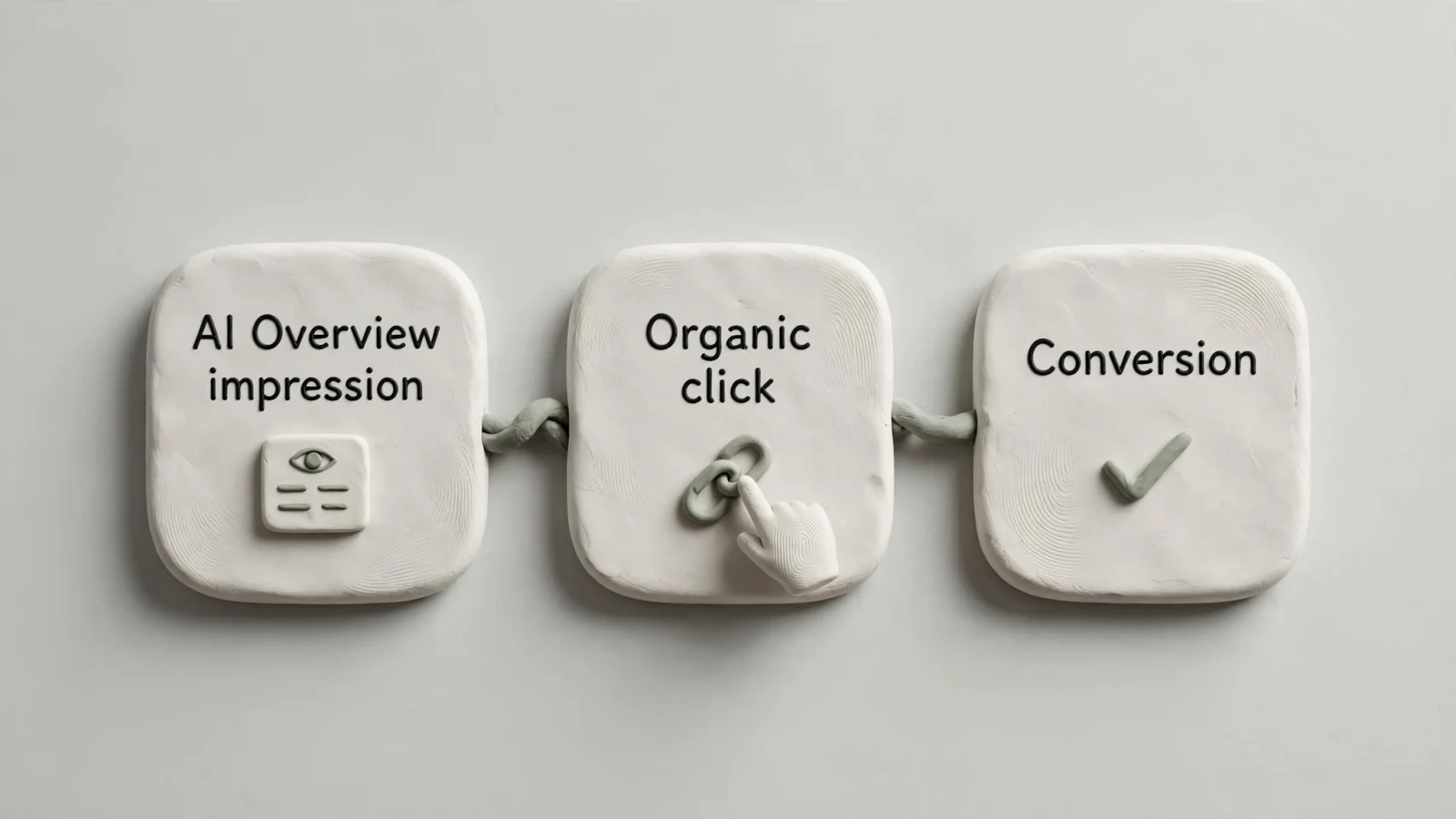
Google AI Overviews can reduce conventional result clicks on affected searches, especially when a summary fully satisfies a user's initial query. However, this effect rarely translates into a universal sitewide traffic loss across a domain. Gaining visibility in an automated summary is different from securing a website visit, so you need to look at both metrics independently. Impressions and textual citations register in reporting tools, yet they remain distinct from organic clicks, engaged sessions, and customer conversions. Understanding how AI overviews affect organic traffic requires separating the exposure of a brand name from the behavior of an actual visitor.
Because generative summaries alter the layout of search results, adapting your strategy means balancing a consistent publishing schedule with outcome tracking. Many solo founders and marketing teams use RankPine to maintain research-led daily publishing, covering relevant long-tail topics while freeing up time to analyze which queries drive qualified visitors. Building a protocol for optimizing content for Google SGE and similar generative search features starts with observing what changes on the screen.
How Generative Summaries Change the Results Page
A generative summary introduces a distinct layer of information above standard organic rankings. The text block attempts to resolve the searcher's intent before they scroll down to evaluate the traditional list of blue links. When an answer appears at the top of the viewport, the searcher often has little motivation to scroll down and click further.
This layout shift alters the definition of search visibility. Securing a supporting link inside a summary block generates an impression, meaning a user saw the citation on their screen, but this does not require the searcher to read the underlying article, engage with your brand, or navigate to your domain. Separating these metrics prevents a misreading of analytics dashboards. Visibility inside a generative box provides brand awareness, while a web visit brings a user onto a domain you control.
Google shows AI Overviews on queries where its systems determine that they add benefits beyond classic Search. Google Search Central’s AI features guidance says these overviews often don’t trigger, while AI Mode is helpful for queries that need further exploration, reasoning, or complex comparisons.
Because the triggering mechanism varies, estimating traffic loss requires examining individual pages rather than applying a flat penalty to an entire website. You might see a steep drop in sessions on a glossary page while your detailed tutorial pages remain unaffected. You measure this difference by identifying which URLs share space with automated text blocks and tracking the resulting engagement changes.
Evidence of Shifting Organic Click Patterns
Observed data confirms that generative text changes browsing behavior, though the severity depends heavily on the sample. Early estimates relied on industry speculation, but recent analyses offer a more concrete view of how users interact with altered search pages.
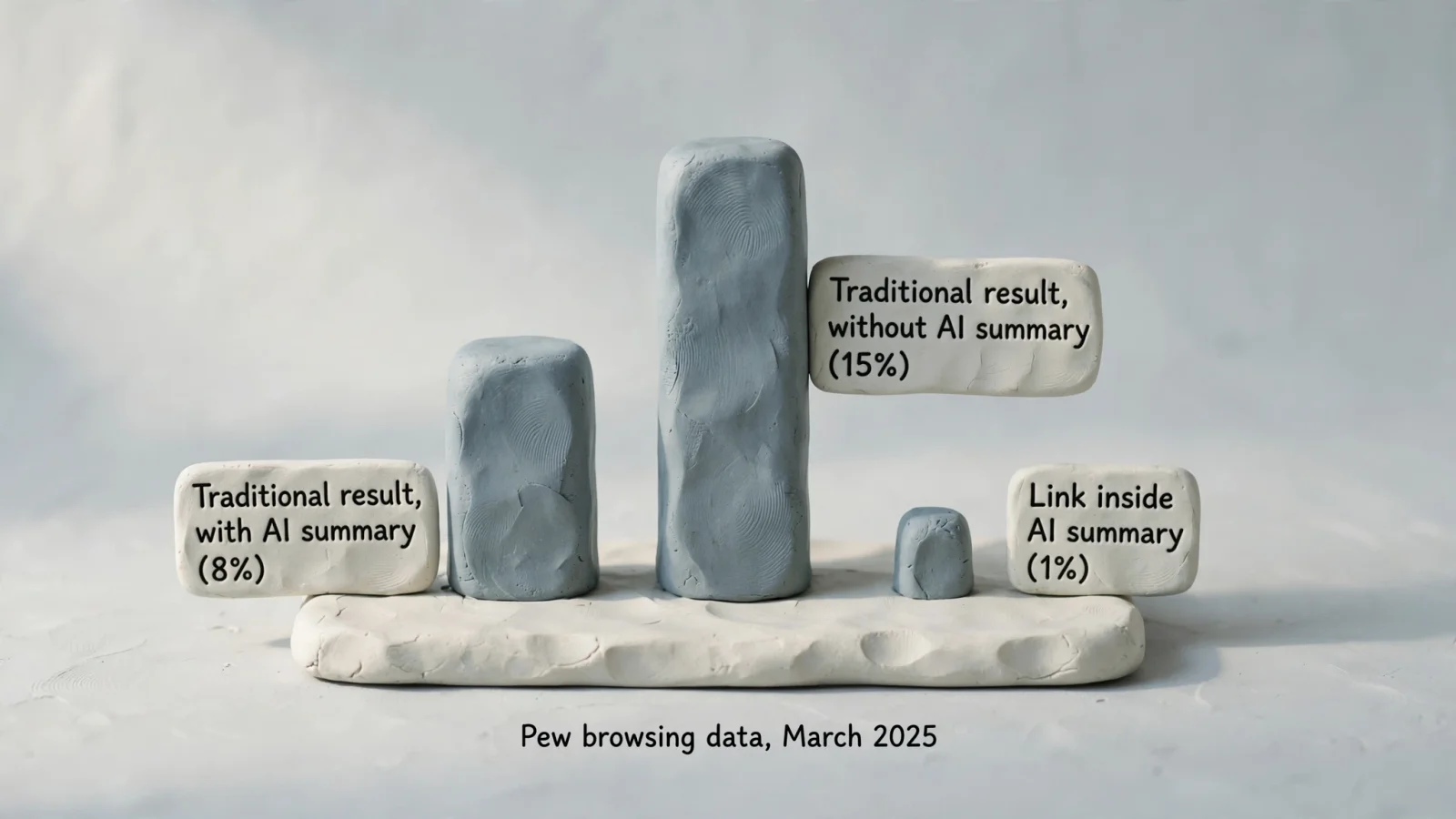
A Pew Research Center analysis tracked the browsing habits of 900 U.S. adults across 68,879 unique Google searches in March 2025. The researchers observed a drop in click-through rates when generative text appeared, noting that users clicked a traditional search result during 8% of visits to pages featuring an AI summary. On search pages lacking that automated summary, users clicked a traditional result 15% of the time, while searchers clicked a link embedded directly within the summary text in only 1% of affected visits.
These figures represent behaviors within a defined user group rather than a universal forecast for every industry. For example, a news publisher might experience different click retention than a software vendor offering technical documentation.
A separate statistical analysis provides a site-specific estimate for a massive informational domain. A 2026 difference-in-differences preprint study by Mehrzad Khosravi and Hema Yoganarasimhan evaluated Wikipedia traffic patterns. The researchers compared search referrals to English Wikipedia articles against referrals to the exact same articles in German and French. The model estimated that default AI Overview availability reduced English Wikipedia search traffic by 4.82% to 5.45%.
You can view the Wikipedia data as evidence of a measurable effect on broad informational content, but it does not serve as a direct benchmark for a specialized business blog, a local service provider, or a niche affiliate site. High-level informational sites carry very different visitor intent than pages designed to sell a specific product or solve a narrow technical problem.
Why the Impact Varies by Query and Page
The likelihood of a user clicking through a generative summary depends on how completely the automated text resolves their problem. A searcher looking for the boiling point of a chemical gets their answer in a single sentence, leaving no reason to visit a webpage. Conversely, a searcher looking for a detailed software migration plan needs code samples, structural diagrams, and verified security protocols. Since a short summary cannot provide that depth, the user clicks the source link.
Identifying the limits of an automated text block helps you prioritize which content deserves investment. Visitors need a compelling reason to leave the search page and enter your domain. Original research data, interactive calculators, downloadable spreadsheet templates, and deep comparative testing offer concrete value that a scraped summary cannot replicate. Evaluating how solo founders can build organic traffic involves shifting your focus from easily summarized definitions toward complex, experience-driven articles.
Google characterizes the traffic surviving this filter as highly qualified, noting that users who click through from search pages featuring AI Overviews tend to spend more time on the destination site. A visitor who bypasses a short automated answer to read a full article arrives with a specific intent to learn, evaluate, or purchase. Tracking conversion rates on these landing pages often reveals that a lower volume of high-intent traffic produces better business outcomes than a high volume of casual readers.
You can test these patterns by matching your analytics data against specific query types and grouping your landing pages into categories based on their complexity. Review the bounce rates and session durations for high-level informational posts alongside deep technical guides. If the broad informational posts lose total sessions but the conversion numbers hold steady across the site, the automated summaries are likely filtering out visitors who never intended to buy or subscribe. When a visitor reads a complex guide on configuring an email server, they typically interact with multiple pages to complete the task. Compare this multi-page journey to the behavior of a user seeking a simple definition of SMTP, who leaves upon reading the answer. Identifying these behavioral differences helps you map your editorial calendar to topics that encourage deep site exploration.
How to Measure AI Visibility and Organic Outcomes
Measuring the shift requires separating search impressions from confirmed website visits. Google Search Console provides specific tools to track generative features, and interpreting this data correctly helps you avoid misguided strategy changes.
Google’s June 2026 post introduces Search Generative AI performance reports in Search Console.
Pairing this visibility data with your standard web performance metrics provides a complete picture of your traffic funnel. Track total impressions in the Generative AI report, then switch to your primary web analytics platform to count the resulting sessions, leads, and purchases. Because Google counts a click on an external link inside an automated overview as a standard organic click, the reporting system assigns every link within that overview the exact same search-result position. Relying solely on average position metrics obscures the available click opportunity, as a link placed within the summary block shares the same numerical rank as a different link in the same block.
Accurate measurement relies on segmenting and comparing similar page groups, so start by filtering your data by query cluster and geographic region. Identify a set of pages recording high AI impressions and compare their performance against similar pages showing zero generative visibility, spot-checking the actual search results pages to confirm the presence of the automated text block. You can treat this comparison as a diagnostic exercise to understand visitor behavior. Finding a correlation between a generative impression and a slight traffic drop identifies a trend, but it does not prove the automated feature caused every lost visit. Any property experiencing seasonal traffic shifts needs to account for normal variance before blaming an automated summary for a decline in visits. By pulling year-over-year data for your primary landing pages and isolating the queries that now trigger generative text, you can accurately measure the conversion rate of your remaining traffic.
Next Steps for Founders and Small Teams
Protecting your site's performance relies on foundational search principles rather than chasing unverified technical tricks. Google maintains that existing search engine optimization best practices remain fully relevant. Your pages need to be properly indexed and eligible to appear with a standard snippet before the system will consider them for a supporting link in a generative summary.
Technical eligibility depends on clear site architecture, fast load times, and accessible rendering. You can ensure crawler access by maintaining an accurate XML sitemap and avoiding aggressive JavaScript blocking. Since hitting the publish button in a content management system does not guarantee indexation, monitor your coverage reports regularly to confirm search systems successfully process your new articles.
Teams looking to sustain growth focus on distinct value and business outcomes instead of raw session counts. A lean marketing department cannot afford to waste weeks manually drafting articles that automated summaries might instantly answer. RankPine solves this capacity problem by automating the daily publishing workflow. Setting up a consistent pipeline allows a team to cover relevant long-tail topics without exhausting human resources, as the platform handles the automated daily generation of well-researched, cited articles directly to your CMS.
This automated cadence works alongside your broader strategy to provide a steady baseline of content. RankPine ensures your site remains active, freeing you to perform factual reviews and analyze performance data. Maintaining a disciplined publishing schedule helps compound organic traffic over the long term, even though no tool guarantees specific citations in an automated summary. The goal is consistent coverage of winnable topics, ensuring your brand has enough indexed surface area to capture the qualified visitors who click through the generative text.
Common Misconceptions About AI Overviews
Misinterpreting how generative search features operate can lead to unhelpful strategy pivots. Maintaining a clear understanding of the mechanics helps you avoid overreacting to minor traffic fluctuations.
First, do not assume a citation guarantees a visitor. An automated summary can prominently feature your brand name and a direct hyperlink while generating zero clicks. A user might read the extracted sentence, find the information sufficient, and close the tab. Google records the impression and counts any clicks that do occur, but the mere presence of the link does not force the user to interact with it.
Second, avoid expecting a flat percentage loss across your entire website. The Pew Research Center data highlights a difference in click-through rates between affected and unaffected pages, while the Wikipedia preprint estimates a single-digit traffic decline for an encyclopedia. Neither study provides a universal loss ratio for independent businesses. A site offering complex consulting services might lose zero clicks, while a site answering crossword puzzle clues might lose half its audience.
Finally, do not abandon informational content wholesale. Top-of-funnel articles still capture users beginning a lengthy research process, and many broad queries never trigger an automated summary at all. Assess your content based on whether it offers distinctive value and supports a specific business goal. Judge an article by the leads it generates and the trust it builds, rather than worrying over a localized drop in total sessions. Consistent publishing remains a reliable mechanism for building an audience, provided you track the metrics that sustain your business.
Growing organic traffic requires consistent execution, even as search pages evolve. RankPine automates the research, drafting, and publishing of fully cited SEO content every single day, allowing lean teams to target winnable long-tail keywords on autopilot. Discover how automated daily publishing scales your reach at RankPine.com.