ChatGPT Alternatives for SEO Blogging: 5 Tools

Swapping one chat interface for another does not fix a broken publishing schedule. A different language model might write a smoother paragraph, but it won't independently research your market, check citations, or format a post in your content management system. When you look for a ChatGPT alternative for SEO blogging, you usually want a way to remove friction from your workflow. The right choice depends on where your current process gets stuck.
Evaluate the ChatGPT Plus Baseline
Before comparing specialized products, it helps to establish what the default option provides. OpenAI positions its consumer subscription as a general-purpose assistant.
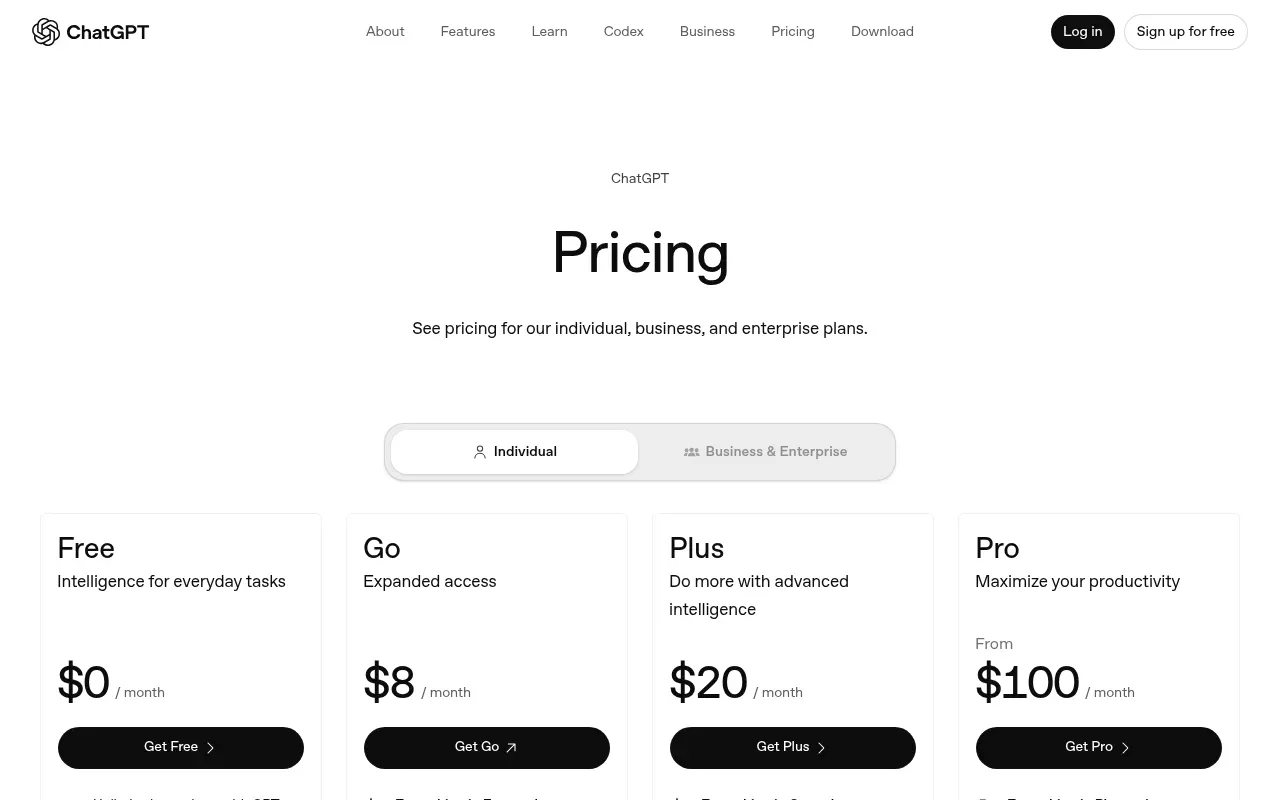
The standard ChatGPT Plus tier costs $20 per month when billed monthly. That subscription provides broader access to web tools and data analysis models, though model availability and usage limits fluctuate. Because API access requires a separate billing agreement, this baseline works best if your main goal is prompting a system for a quick draft. If you want software to handle topic selection, brand voice enforcement, or scheduled publishing, you need a tool built for those operations.
Identify Your Publishing Bottleneck
Different searchers need different solutions. If you run a solo operation, you probably want an automated process that limits your direct involvement. If you manage a marketing department, you might care most about maintaining a strict brand voice across multiple writers. Niche site builders, meanwhile, need to scale production across several domains without targeting the same query twice.
Compare your options based on the actual work they do rather than the text they output.
| Tool | Primary Strength | Publishing Workflow | 2026 Starting Price (U.S.) |
|---|---|---|---|
| RankPine | Daily automated publishing | Direct to CMS | $99/month |
| Claude Pro | Source-backed research | Manual copy-paste | $20/month |
| Google AI Pro | Workspace integration | Manual copy-paste | $19.99/month |
| Jasper Pro | Brand voice control | Export or integration | $69/month |
| Frase | SEO content operations | Direct to CMS available | $49/month |
1. RankPine: Best for Daily SEO Publishing
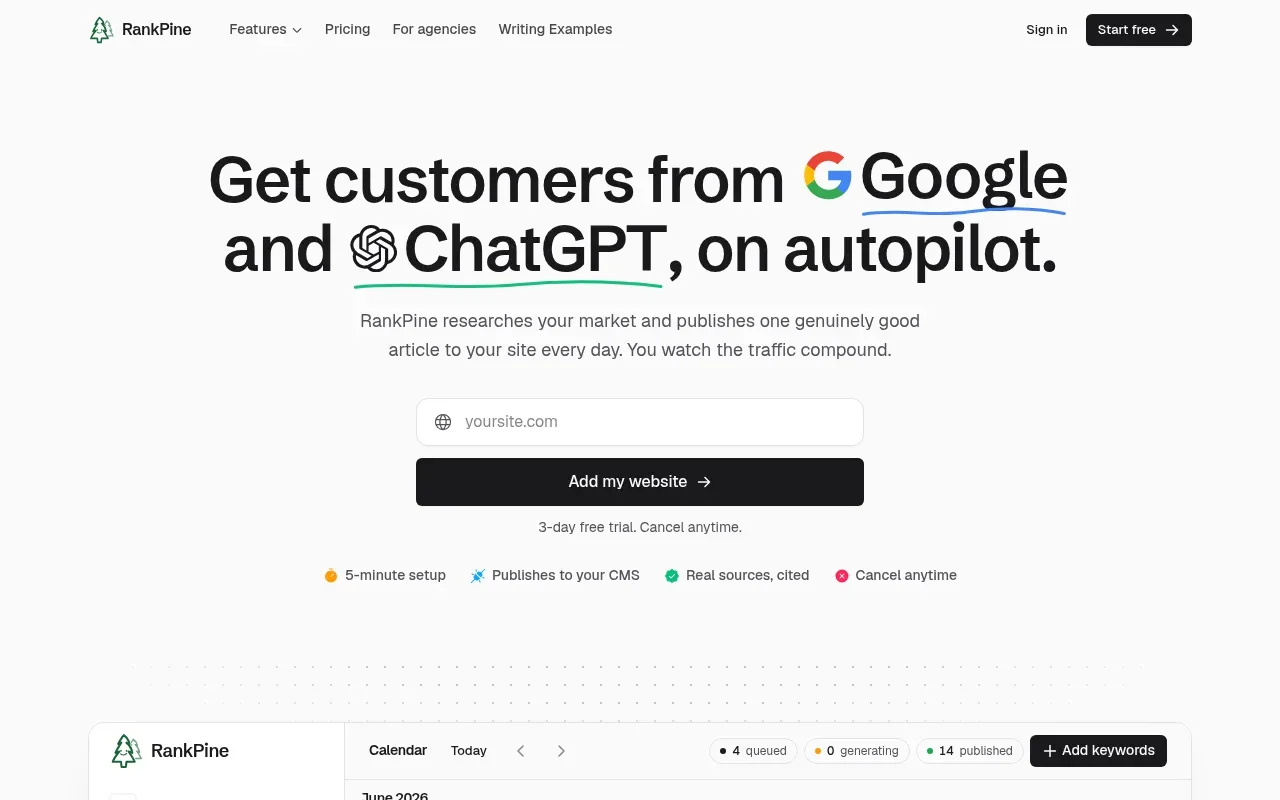
You might not want a better chat interface; you might prefer a finished article live on your website. RankPine serves this need by operating as a complete content pipeline rather than a prompt-and-response tool. If you are comparing buy hands-free blogging software options, this platform removes the manual handoffs between research, drafting, and uploading.
How the Autopilot Pipeline Works
RankPine manages the entire lifecycle of a website's blogging strategy on autopilot. By analyzing market trends and competitors, the system identifies long-tail keywords with realistic ranking difficulty. It uses that data to generate one well-researched article with external citations, and then it publishes that post directly to your CMS every day. This daily cadence offers a clear operational advantage if you struggle to maintain a consistent publishing schedule.
Review Capacity, Pricing, and Add-Ons
The public Autopilot plan costs $99 per month for a single website. Because that tier includes 30 SEO articles per month, it matches the one-per-day publishing schedule. You can also add AI-visibility tracking for $49 per site per month to monitor how your content performs in modern AI search environments.
Understand the Benefits and Limitations
If you operate solo or run a lean marketing team, you will likely benefit most from this automated approach. The platform optimizes content for both traditional search engines like Google and emerging AI chatbots like Claude and Gemini, so you spend less time coordinating topic selection and more time analyzing results. Daily scheduling can make publishing more consistent, but frequency alone doesn't guarantee rankings or growing traffic.
2. Claude Pro: Best for Research-Led Drafting
Anthropic provides a general-purpose model that excels at processing long documents and analyzing complex topics. Claude Pro works well if you want to steer the research yourself and manage optimization separately.
Conduct Web Search and Research
On paid Claude plans, Research searches the web when web search is enabled, draws on connected internal context, and provides citations you can check. Research sessions can use up your account limits faster than standard conversations because Claude retrieves multiple sources and provides comprehensive responses.
Manage Pricing and Remaining SEO Tasks
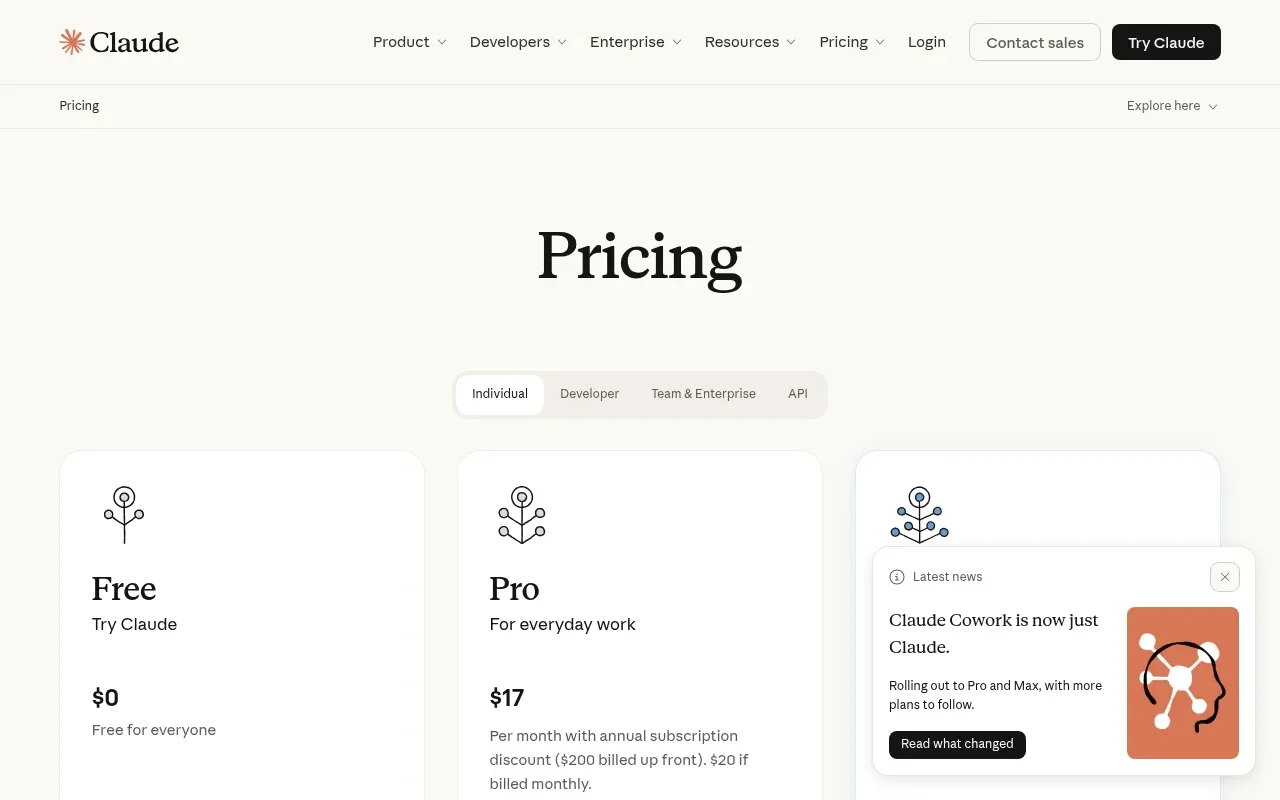
Claude Pro costs $20 per month in the U.S. for monthly billing, though pricing can vary by region. Because this is a general assistant, you retain all the SEO responsibilities. This means validating keyword demand with separate tools and checking for topic overlap across your existing pages. Once the draft is ready, you still have to manage the optimization, formatting, and publishing steps manually.
3. Google AI Pro (Gemini): Best for Workspace Research
If your team already runs its entire operation in Google Workspace, you might prefer an assistant that lives alongside your data. Gemini fills this role by reading the briefs, notes, and guidelines you keep on file.

Utilize Deep Research With Workspace Context
Google AI Pro features a Deep Research capability that connects directly to your Gmail, Drive, Docs, and Chat context. When you ask the system to draft a blog post, it pulls product specifications from a shared document or references an email chain with a subject matter expert. This integration saves you from copying and pasting source material into a chat window.
Handle Pricing and the SEO Handoff
Google lists Google AI Pro as a paid plan, though feature availability varies by country. Gemini can generate and refine drafts in Google Docs, but those drafts do not establish external keyword demand. Separate search data can help establish whether people are looking for a topic, and an editorial review is still part of moving a draft from Google Docs to your live website.

4. Jasper Pro: Best for Brand-Controlled Content
If you run a marketing department, you face different challenges than a solo founder. A team with multiple contributors needs strict brand guidelines to prevent the blog from sounding like five different companies, and Jasper focuses on marketing-content workflows.
Maintain Brand Voice and Marketing Workflows
Jasper allows you to configure specific brand voices, upload style guides, and ensure every output matches your corporate tone. Instead of an open-ended research assistant, you use it as a dedicated content production environment. Its available SEO data integrations may or may not meet your keyword research needs, since strong brand guardrails do not automatically replace measured search volume data.
Evaluate Price, Seats, and SEO Fit
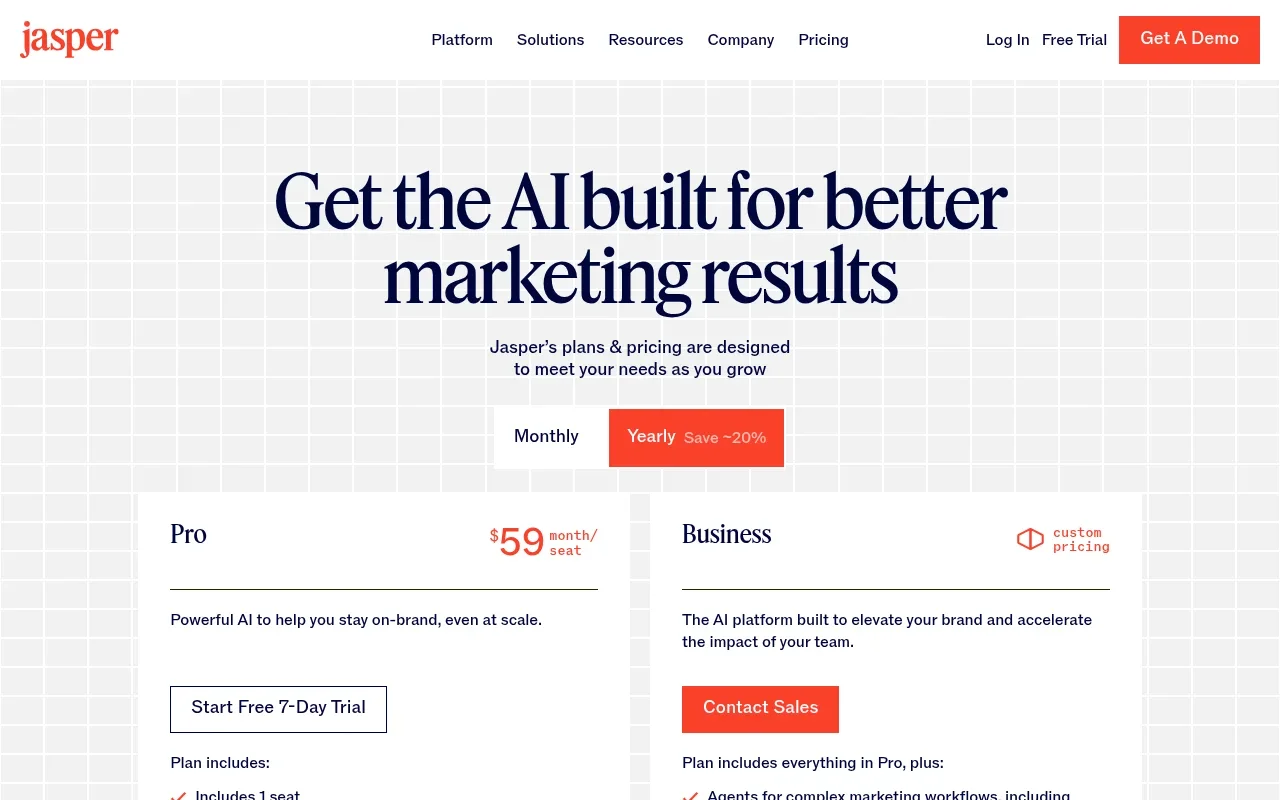
The Jasper Pro plan costs $59 per month when billed yearly or $69 per month on a monthly cycle, and this tier includes one user seat. If you have a larger marketing team, you need custom Business pricing to accommodate collaboration. The higher price point makes sense if your team prioritizes brand consistency over raw article volume.
5. Frase: Best for SEO Content Operations
Frase operates as a dedicated SEO workflow platform that focuses on analyzing search engine result pages, scoring content against competitors, and identifying keyword gaps.
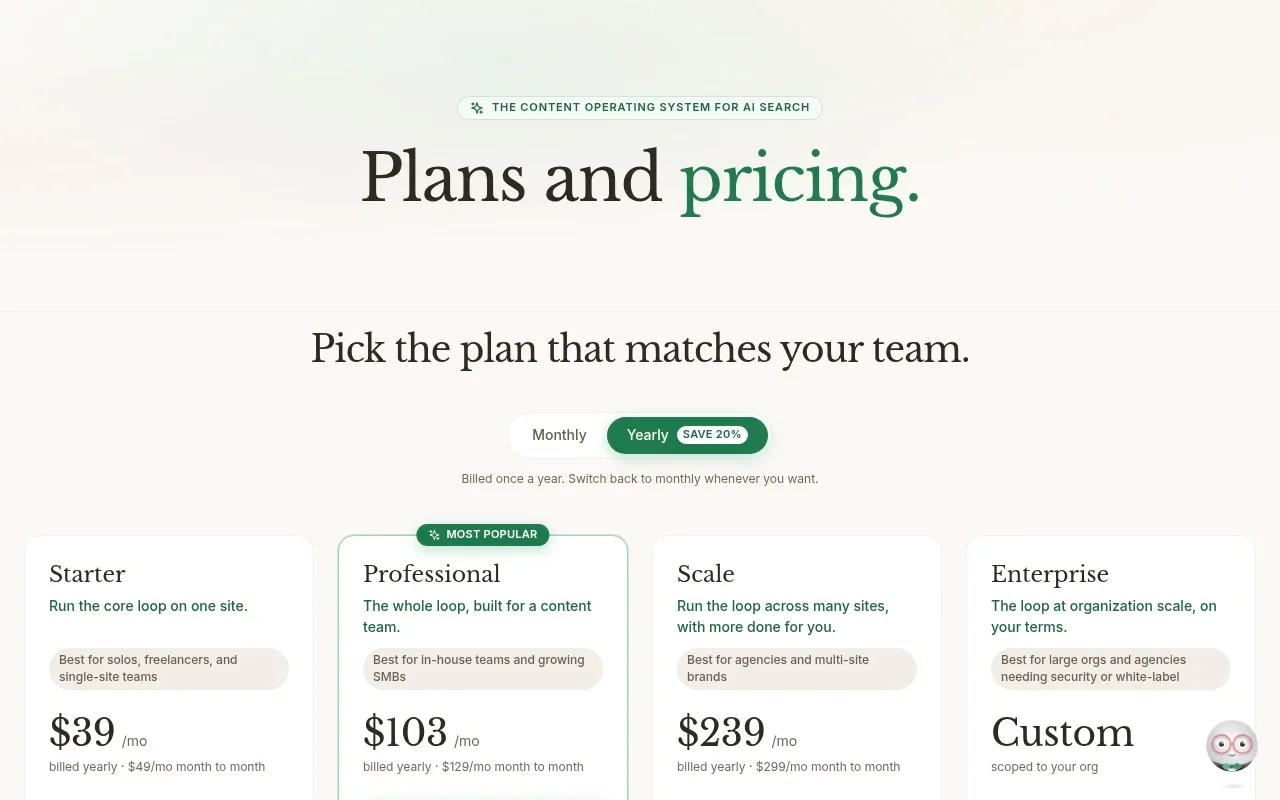
Use Optimization and Publishing Tools
The platform provides SEO scoring, content audits, and internal link suggestions. Unlike a standard chatbot, it includes tools designed specifically for search visibility. Frase also features an agent that can publish content on its own when enabled, making it a strong contender for teams building full content operations rather than generating isolated text.
Compare Capacity Before Choosing
Frase structures its pricing around article volume and user seats. The Starter plan costs $39 per month when billed yearly or $49 per month when billed monthly, limiting you to 10 articles. The Professional tier costs $103 per month when billed yearly or $129 per month when billed monthly, which upgrades you to 40 articles per month, 3 user seats, and support for 5 sites. A Scale plan exists for larger operations at $239 per month when billed yearly or $299 per month when billed monthly for 100 articles across up to 10 domains, so compare these limits with your publishing goals.

Select by Workflow, Then Publish With Care
Selecting a tool is the first step, and you have to build a system around it. The best software will still produce poor results if you feed it the wrong topics or skip the review stage. To understand how different chat interfaces stack up broadly, review a dedicated Casper Chatbot comparison. For SEO blogging, your focus must remain on the mechanics of publishing.
Compare the Work Beyond the Draft
Every AI writing tool generates text quickly, so compare the work left over after the draft exists. Look at whether the software uses measured search data or brainstorms topic ideas, since an AI-generated search volume estimate is not verified data. Search intent and topic overlap matter too; publishing one article per keyword variation can create redundant pages instead of a useful topic cluster.
Research quality matters as well. A citation helps only if the cited source supports the nearby sentence, and software often struggles to distinguish between a passing mention and a primary source. First-hand knowledge, product testing, or original examples can elevate a piece beyond a summary of existing pages.
Match the Tool to Your Team
Your team structure shapes your software needs. If you operate as a solo founder trying to minimize handoffs, you will likely prefer RankPine for its daily automated publishing. If you act as a marketing director managing three writers, you might prioritize Jasper for its voice controls or Frase for its collaboration features. When building niche sites, compare per-site capacity, content planning tools, and duplicate-topic safeguards.
Publish for People and Measure Results
Google's spam policies include scaled content abuse aimed at manipulating search rankings. Google describes large amounts of unoriginal content with little to no value, generated primarily to manipulate rankings rather than help users, as a typical form of this abuse. Prioritize material that helps users over pages created primarily to manipulate rankings.
Visibility in emerging platforms requires technical hygiene. For ChatGPT Search, OpenAI advises publishers not to block OAI-SearchBot if they want site content to be eligible for inclusion in summaries. Referral URLs from ChatGPT Search include a utm_source parameter that helps you measure visits in your analytics platform, though neither inclusion nor visits are guaranteed. Google Search Central announced that its Search Generative AI performance reports rolled out worldwide by August 31, 2026. You can use these reports to track Google AI-search visibility, but they do not cover every chatbot or every kind of citation on the internet.
A practical workflow starts with choosing a genuine topic, validating demand with measured data, researching primary sources, checking citations, reviewing the CMS output, and measuring the resulting clicks and conversions.
FAQs
Which ChatGPT alternative is best for SEO blogging?
The best option depends on your bottleneck. RankPine fits solo operations wanting automated daily publishing from research to CMS. Jasper suits marketing departments needing brand voice control. Frase works well for content groups focused heavily on SERP analysis and content scoring.
Can an AI writing tool do keyword research?
A general chatbot cannot perform reliable keyword research because it lacks live search volume and competition data. Dedicated SEO platforms connect to live search databases to validate demand before generating content.
Can AI-generated content comply with Google policies?
Google policies focus on the quality and purpose of the content. Pages created primarily to manipulate search rankings violate spam policies regardless of how they are written. Content that helps users, provides original insight, and answers the query remains compliant.
Which tools can publish blog posts automatically?
RankPine schedules and publishes one researched article per day directly to your CMS. Frase also offers an autonomous publishing agent on its paid plans. Check which content management systems a tool supports before subscribing.
How can a site become eligible to appear in ChatGPT Search?
To be eligible, a site’s robots.txt file cannot block OAI-SearchBot. Allowing the crawler enables OpenAI to read the site for potential inclusion in search summaries and snippets. Eligibility does not guarantee that your site will be cited or receive referral traffic.
Consistent organic growth requires discipline. Writing one great article a month rarely moves the needle, and managing freelancers or prompting chat interfaces daily drains your time. RankPine solves this by automating the entire lifecycle of your blogging strategy. The platform researches winnable long-tail keywords, drafts source-cited content, and publishes it directly to your CMS every day. Stop managing the content handoff and start focusing on your business. Visit RankPine.com to put your SEO workflow on autopilot.