SEObot vs ContentMonk
A detailed comparison · Updated August 2026
SEObot and ContentMonk barely compete, and that's the point of comparing them. SEObot is the cheapest way to fill a portfolio of sites with generic informational content; ContentMonk is a premium AI-visibility platform that writes a handful of carefully-voiced B2B articles and can't yet publish any of them automatically.
If your shortlist somehow contains both, the real question is unresolved strategy: volume or curation.
What is SEObot?
The original autonomous "SEO robot" for busy founders, built by John Rush.
SEObot is the elder statesman of AI autoblogging — launched in 2023 by serial indie founder John Rush, who runs it across his own portfolio of SaaS products and directories. The pitch is taking "100% of SEO work out of your way": it researches keywords, plans content autonomously, writes long articles, handles internal and external linking, and syncs to a dozen CMSs including WordPress, Webflow, Shopify, Ghost, Notion, and HubSpot, plus Zapier and Make.
Its automation goes further than most competitors: programmatic SEO pages, YouTube-video-to-article conversion, news articles, and a monthly re-linking pass that re-optimizes internal links as the library grows. Pricing is per-article volume — from $49/mo for 9 articles up to $1,050/mo for 300, bottoming out at $3.50 per article for agencies.
SEObot is also unusually candid about its limits. Its own FAQ admits output quality is "sometimes matching average human quality, sometimes falling short", and independent reviews are blunter — "word salad" comes up. It's a tool built for generic informational content at scale, with thin brand controls: no image styles, no brand colors, no documented tone presets, and no team features.
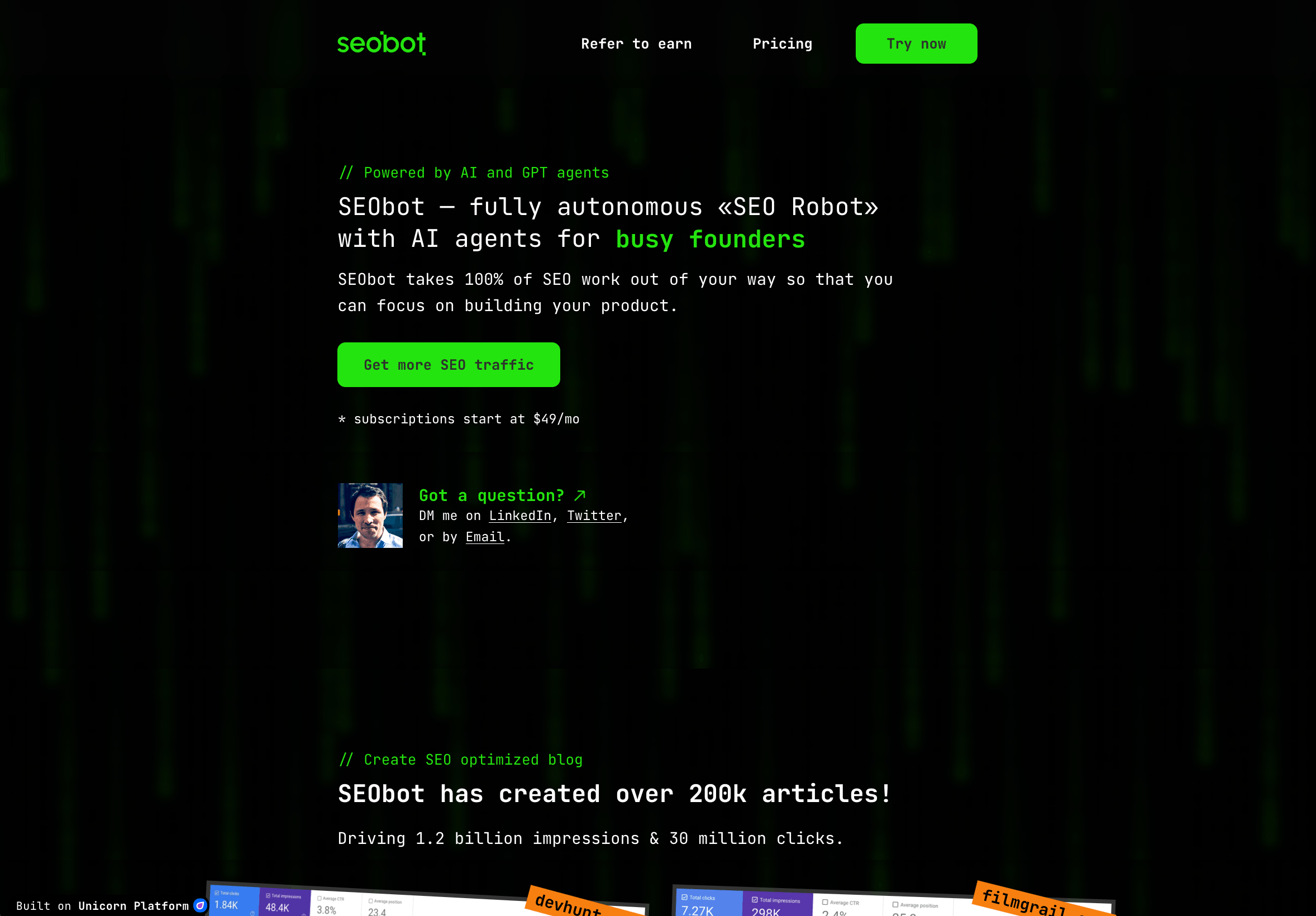
Where SEObot shines
- Cheapest credible entry in the category — $49/mo, with a first-article refund guarantee instead of a trial
- Deepest automation breadth: programmatic SEO, video-to-article, news posts, monthly internal re-linking
- Widest integration surface — a dozen CMSs plus Zapier, Make, REST API, and webhooks
- Battle-tested at scale: 200k+ articles claimed, dogfooded across the founder's own portfolio
Where it falls short
- Content quality is the recurring complaint — its own FAQ concedes output sometimes falls short of average human writing
- No brand controls: no image styles or brand colors, no documented tone presets
- No team features, no per-article SEO scoring, and rank tracking is unverified
- Full pricing is only revealed after onboarding, and there's no free trial — just a refund guarantee on the first article
What is ContentMonk?
AI-visibility tracking plus B2B content creation — not really an autoblogger.
ContentMonk is the odd one out in this category: it grew out of Ugi Djuric's B2B SaaS content agency and has pivoted toward AI search visibility. Its headline feature is tracking how ChatGPT, Claude, Perplexity, and Google's AI results mention and recommend your brand — alongside classic keyword rank tracking — then closing the gaps it finds with an AI writing workflow tuned for brand voice.
The content side is deliberately quality-first: a knowledge base of your docs and transcripts feeds the writing, every team member can have their own style guide, and finished articles can be repurposed into LinkedIn posts, Reddit threads, newsletters, and ebooks. It's aimed at B2B SaaS marketing teams that publish deliberately, not at volume.
What it isn't is an autopilot. There are no confirmed CMS integrations — WordPress and Webflow publishing have been "expected" on its own comparison pages since late 2024 — no auto-publishing, no generated images, and articles are metered tightly: the $99 Starter plan includes just 10 a month, and matching RankPine's 30 requires the $449 Scale plan.
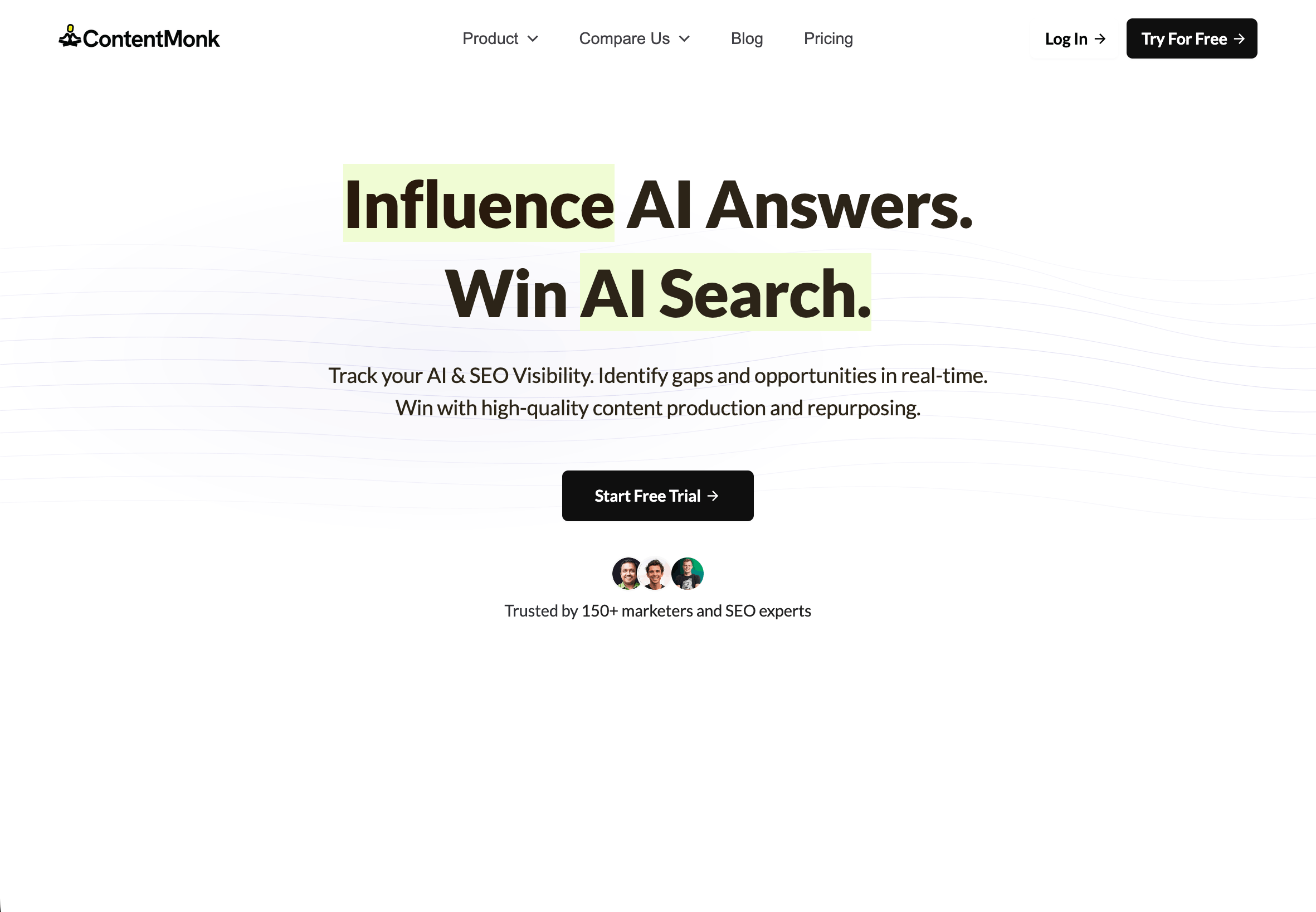
Where ContentMonk shines
- Unique AI-visibility tracking — share of voice across ChatGPT, Claude, Perplexity, and Google AI, plus keyword rank tracking
- Serious brand-voice machinery: knowledge-base-driven writing and per-team-member style guides
- Content repurposing into LinkedIn, Reddit, newsletters, and ebooks — which volume autobloggers don't do
- Real content-agency pedigree behind the writing workflow
Where it falls short
- No confirmed CMS publishing — auto-publish has been on the roadmap since late 2024, so every article is a copy-paste
- Expensive per article: 10/mo at $99, and $449/mo to reach the 30 articles competitors include at $99
- No image generation, and capped at 3 users on every tier
- Thin independent review footprint, and its own site shows contradictory (stale) pricing in places
Two products, two theories of SEO
SEObot's theory: search rewards coverage, so ship as many pages as cheaply as possible — $49 to $1,050 a month buys 9 to 300 articles, published automatically to a dozen platforms. ContentMonk's theory: search (and AI answers) reward brand authority, so write fewer pieces from a knowledge base of your own docs, in your team's voices, and measure how AI engines cite you — 10 articles at $99, 30 at $449, published by hand.
The per-article gap is stark: $3.50–5.40 at SEObot versus $9.90–15 at ContentMonk, before counting ContentMonk's missing images and manual publishing.
What each can't do at all
ContentMonk has no autopilot, no CMS integrations (still "expected" after more than a year), and no image generation — as an autoblogger it simply isn't one. SEObot has no brand-voice machinery, no team features, no AI-visibility tracking, and no aspiration to sound like your company; its own FAQ tells you quality varies.
ContentMonk does carry the only real post-publish measurement in this pairing: keyword rank tracking plus share-of-voice across ChatGPT, Claude, and Perplexity.
SEObot vs ContentMonk vs RankPine, feature by feature
| Feature | SEObot | ContentMonk | RankPine |
|---|---|---|---|
| Content quality | |||
| Daily autopilot publishing | — | ||
| Automated keyword research | metered queries | ||
| Multi-pass editorial rewrite | — | — | |
| External links & source citations | |||
| Internal links to your pages | monthly re-linking | — | |
| Per-article SEO scorecard | — | ||
| In-app WYSIWYG editor + AI rewrite | |||
| Generated article images | — | ||
| Custom image style & brand colors | — | — | |
| Languages | 50+ | — | 100+ |
| Strategy & data | |||
| Google Search Console integration | — | ||
| Keyword rank tracking | + AI visibility | ||
| Opt-in backlink exchange | — | — | 100 credits/mo + top-ups |
| Content calendar | |||
| Custom instructions & tone control | |||
| Publishing | |||
| WordPress | — | ||
| Webflow | — | ||
| Ghost | — | ||
| Notion | — | ||
| Shopify | — | ||
| Webhook / REST API | — | ||
| Zapier / Make / n8n | — | ||
| RSS feed | — | — | |
| Teams & pricing | |||
| Team members & roles | — | 3 users max | |
| Multi-site volume discounts | per-article agency rates | workspaces | −10% to −20% |
| Free trial | None — refund guarantee | 7 days | 3 days |
| Entry price | $49/mo | $99/mo | $99/mo · $990/yr |
| Articles included | 9/mo at $49 · 20/mo at $99 | 10/mo at $99 · 30/mo at $449 | 30/mo per site |
Product facts reviewed July 2026; backlink-exchange and Outrank pricing details updated August 2026. Products change — if you spot something out of date, tell us and we'll fix it.
Pricing
SEObot
$49/mo
Volume-based tiers from $49/mo for 9 articles to $1,050/mo for 300 — about $5.40 per article at the entry tier, $3.50 at agency volume.
- $49/mo — 9 articles · $99/mo — 20 articles · $199/mo — 50 articles
- $499/mo — 100 articles + 20 directory listings · up to $1,050/mo — 300 articles
- Agency floor of $3.50/article at 300+ articles
- No free trial — full refund on the $49 plan if you're unsatisfied after the first article
- Full plan list only shown after onboarding; no published annual billing
ContentMonk
$99/mo
From $99/mo for 10 articles (Starter) to $449/mo for 30 (Scale) — roughly three times RankPine's cost per article, without publishing.
- Starter: $99/mo — 10 articles, 50 AI prompts tracked daily, 200 tracked keywords, 1 workspace
- Pro: $199/mo — 15 articles, 150 prompts, 400 keywords, unlimited workspaces
- Scale: $449/mo — 30 articles, 300 prompts, 600 keywords
- All tiers include 3 users; 7-day free trial, no credit card required
RankPine
$99/mo
$99 per site per month for 30 published articles — about $3.30 per researched, edited, illustrated article.
- One plan: $99/site/mo or $990/site/yr (2 months free) — 30 articles per month per site
- Volume discounts apply automatically: 2–4 sites −10%, 5–19 −15%, 20+ −20%
- 3-day free trial — your first three articles are generated before you pay anything
- Paid sites can opt into Backlink Exchange with 100 included credits per month; one-time top-up packs start at $39
- Unlimited team members per site, cancel anytime
Where SEObot and ContentMonk both fall short
Put the two side by side and a pattern shows up: both concentrate on producing and distributing articles, and both get thinner the closer you look at what happens to each article before and after it ships.
- Neither runs a real editorial pass. Articles go from the model to your blog without a multi-pass rewrite for filler, flow, or fact-checking — which is exactly where AI content gets caught.
- Neither offers an opt-in backlink exchange. RankPine does, with 100 monthly credits, placement controls, live verification, and explicit disclosure that link networks still carry search-policy risk.
None of this makes either tool a bad buy — it defines what you're buying. If the writing itself, and proof that it ranks, is the part you care about, that's the gap RankPine was built for.
What is RankPine?
An AI SEO agent that grows your traffic on autopilot.
RankPine connects to your website, researches your niche and competitors, and publishes one genuinely good article to your CMS every day. The difference is what happens between research and publish: every article goes through multiple editing passes that cut filler phrases, check claims against sources, and rewrite anything that reads like it came from a template.
Keywords come from real search data and your own Google Search Console — not from asking a language model to guess what people search for. Once articles are live, RankPine keeps watching Search Console and tracks how each one actually ranks, so the strategy adjusts to what works on your site instead of following a fixed plan.
Paid sites can also opt into Backlink Exchange. Each site gets 100 monthly credits for relevant placements, with controls for referring-site Domain Rating and source language. Links are inserted only when they fit an existing sentence naturally, checked after publishing, and refunded if a placement is rejected or later disappears.
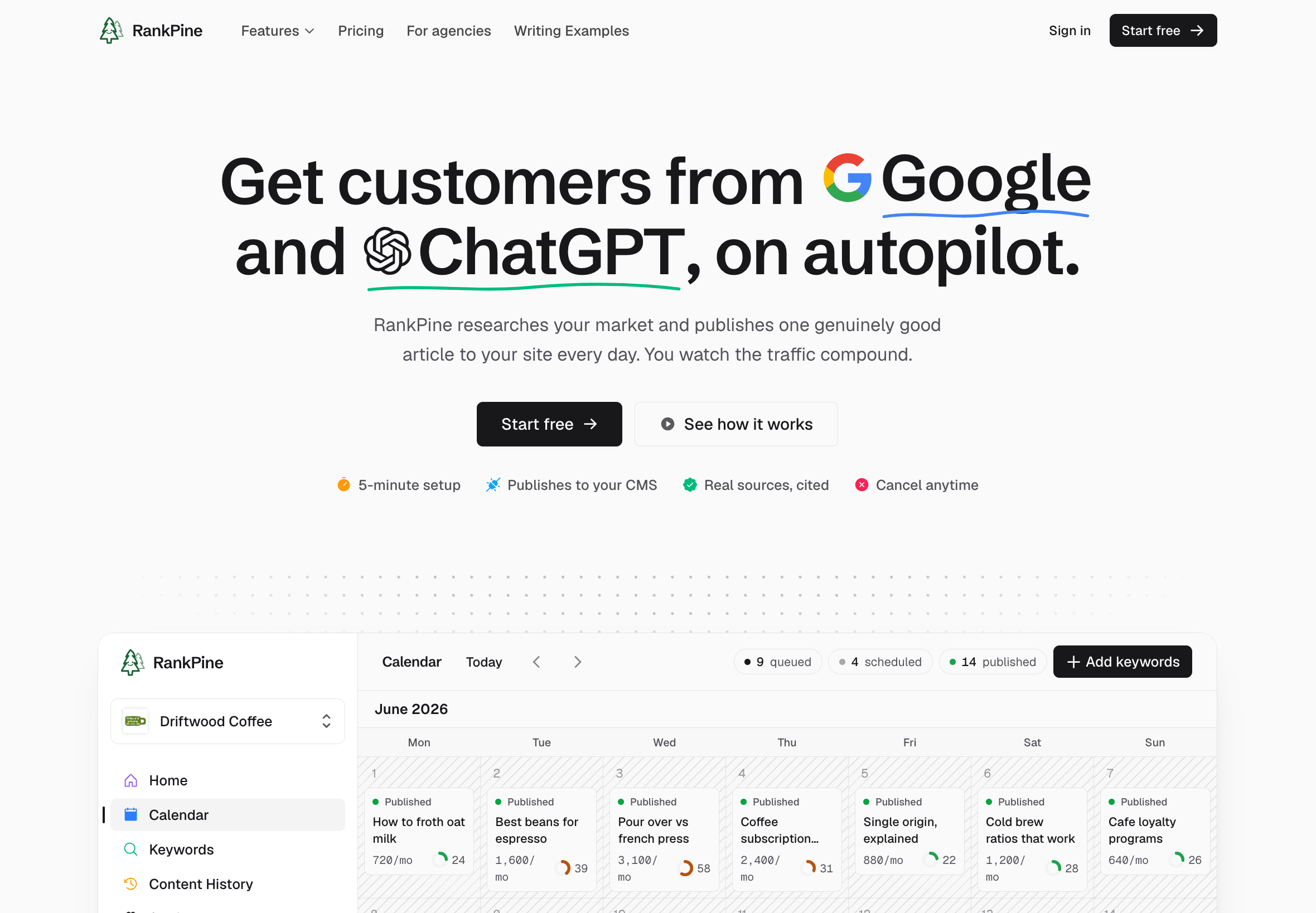
Where RankPine shines
- Editing passes built to remove AI filler — the pipeline rewrites for flow and cuts phrases like "in today's digital landscape" before anything ships
- Keyword plan driven by real search data and your Search Console, with per-keyword rank tracking after publish
- Deterministic per-check SEO scorecard plus a real WYSIWYG editor with AI rewrite-and-diff
- Opt-in Backlink Exchange with 100 monthly credits, relevance and DR controls, live verification, and refunds for lost links
- Transparent pricing: $99/site/mo, $990/yr (2 months free), volume discounts that apply automatically
Where it falls short
- No native Framer integration yet — publishing targets include WordPress, Shopify, Wix Blog, Webflow, Ghost, Notion, GoHighLevel Blog, RSS, and webhook/REST
- Backlink Exchange is optional and controlled, but automated link services and excessive exchanges can still conflict with Google's spam policies — no network can guarantee safety or rankings
The verdict
These sit at opposite corners of the market. SEObot for cheap coverage across projects you don't emotionally attach to; ContentMonk for a funded B2B brand that publishes deliberately and wants AI-search visibility measured — just budget for doing the publishing yourself.
- Choose SEObot if you want the cheapest possible way to ship generic informational content at volume and don't need brand voice, images, or a team.
- Choose ContentMonk if your priority is measuring AI-search visibility for a B2B SaaS brand and your team is happy publishing manually.
- Choose RankPine if the deciding factor is the articles themselves — researched, multi-pass edited, published daily, and rank-tracked afterward so the plan learns from what works — with an optional verified backlink exchange when you want it.

Or skip the coin flip and judge the writing.
Start the free trial and get your first three researched, edited articles before paying anything — then compare them with anyone.
- 3-day free trial
- Three articles before you pay
- Cancel anytime