AI Content Optimization Tools That Actually Matter

Generating text is the easiest part of modern publishing, because the real bottleneck is deciding what to cover, verifying claims, mapping internal links, and moving a final draft into your CMS without breaking site architecture. When you evaluate AI content optimization tools, you are choosing how much of that operational loop to hand over to software. A system that only rewrites paragraphs leaves the hardest work on your desk.
How Optimization Platforms Solve Publishing Bottlenecks
An optimization platform does more than fill a blank page. This software category supports topic discovery, search intent matching, content briefs, and competitor gap analysis. It also handles research, citations, on-page structure, internal linking, and direct CMS publishing.
You can map the market by looking at the specific problem each tool solves. Writing assistants primarily generate or rewrite draft text from a prompt, which leaves you to manage the strategy and the publishing workflow yourself. On-page optimizers analyze a finished draft against competing search results to suggest semantic additions, though they rarely offer a way to track the published page. Keyword platforms identify volume and cluster opportunities, but you need separate software to execute the production. Meanwhile, AI-visibility monitors track mentions or citations across chatbot interfaces to measure results, yet they do not improve the underlying page.
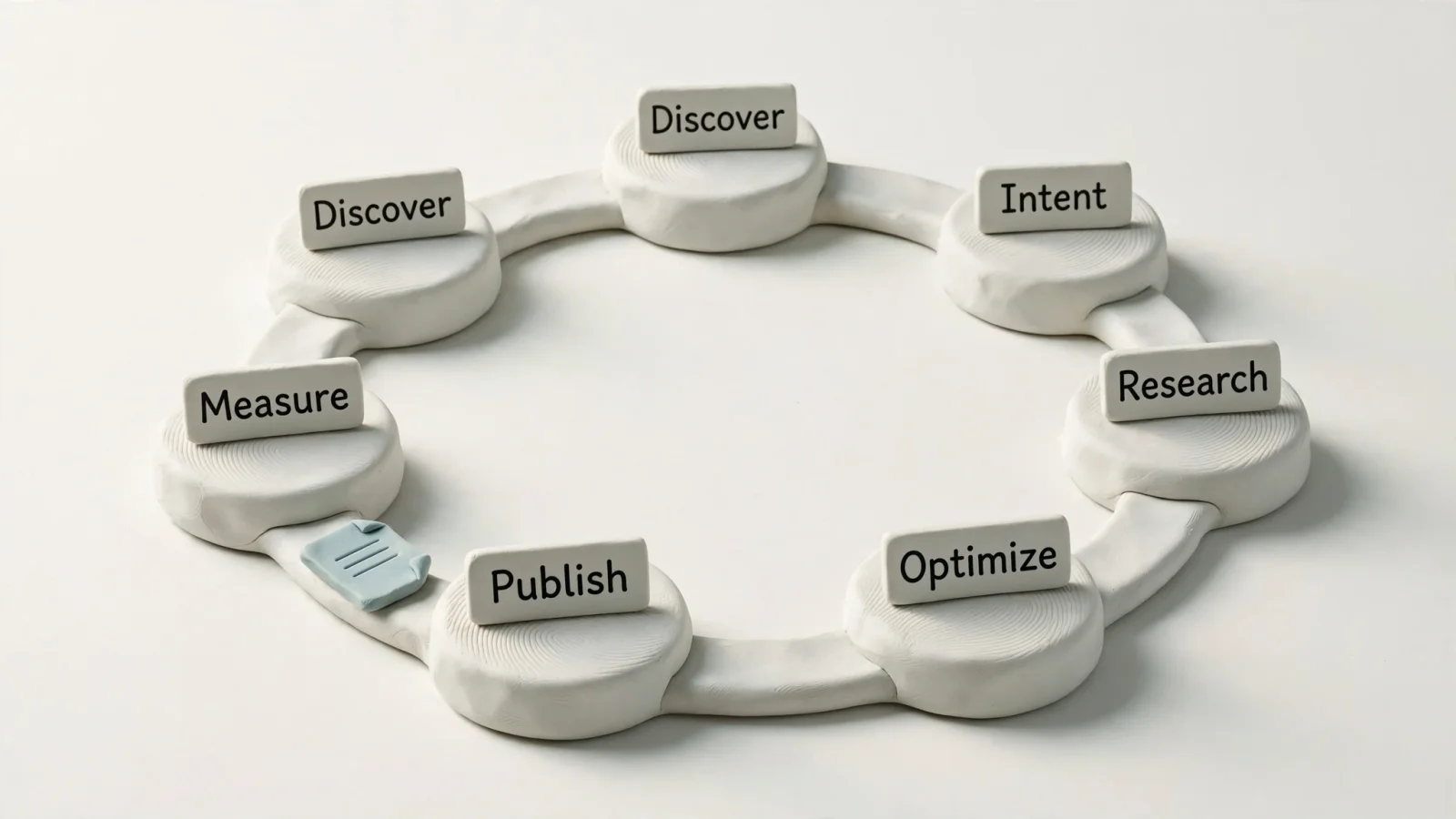
End-to-end systems connect these isolated steps into a single sequence. If you need a connected workflow, RankPine acts as an automated SEO content operating system. Instead of acting as a universal ranking guarantee, RankPine manages the full lifecycle from identifying a realistic topic gap to publishing a cited article directly to your site, removing the friction of moving text between research tabs, writing windows, and your live database.
Identify The Workflow Bottleneck You Need To Fix
A tool works only if it solves a problem you experience. That broad interest becomes a useful buying filter once you define the limits of your daily operations. A strong platform finds topics that fit your site, audience, product offer, and realistic competitive position, rather than selecting keywords based entirely on search volume.
Build content around what your audience will find useful. To do that, you need a system that adds original information, uses clear sourcing, and highlights authorship. Google’s guidance on useful, people-first content emphasizes substantial coverage and demonstrated expertise, and confirms there is no preferred article word count, so avoid adding filler to reach an arbitrary length target.
Different publishing models expose different operational bottlenecks. If you operate solo, you need CMS integration, automatic scheduling, and easy rollback options to maintain a site without managing freelance writers. A lean marketing department relies on shared approval rules so an editor can review factual claims and brand voice before a post goes live. Niche site builders require tools that support mass refreshing, merging, or pruning to prevent content cannibalization across hundreds of related pages. If your software cannot handle this maintenance phase, your site architecture will collapse under its own weight.
Core Capabilities To Compare During Evaluation
To evaluate software, use a practical matrix that separates strong capabilities from weak ones. Strong research capabilities explain why a topic is worthwhile, map the specific intent behind the query, and identify useful competitor gaps without encouraging direct rewriting. A good content brief gives the writer a defined purpose, a specific audience, a structural outline, and clear evidence requirements, whereas weak tools return a copied competitor outline with no editorial direction.
On-page optimization improves titles, headings, summaries, and page clarity without creating awkward repetition. Content scores act as diagnostic aids for missing coverage or weak structure, but they do not predict traffic. Building a strategy around keyword density targets usually produces unreadable text.
Research and publishing controls separate professional platforms from basic wrappers. A capable system preserves real source context, flags unsupported claims, manages draft approvals, and supports scheduling. It also links claims to verifiable sources rather than inventing references to satisfy a prompt. Without these basic quality controls, an automated pipeline publishes hallucinated facts at a higher velocity.
Separate AI-Search Readiness From Hype
You might wonder whether you need a separate playbook for emerging search interfaces. The most reliable approach to visibility across large language models relies on clear structure rather than secret prompt hacks. Foundational SEO remains the durable basis for visibility, because language models need to access and understand a page before they can cite it.
Google’s guidance for generative AI search features says foundational SEO still matters, including crawlable content, a clear technical structure, and unique, valuable content. The documentation says you don’t need special AI text files or markup, and there’s no requirement to break content into tiny pieces. It also says seeking inauthentic mentions isn’t as helpful as it might seem.
Measurement requires a dedicated reporting layer. The AI Performance report in Bing Webmaster Tools distinguishes between cited pages, citation activity, visibility trends, and the specific grounding queries users enter. This data covers Microsoft Copilot, Bing AI-generated summaries, and selected partner experiences.
You cannot assume that Google, ChatGPT, Claude, and Gemini use identical retrieval systems or share a single optimization formula. Software can support shared principles like structural clarity, verifiable evidence, content freshness, and topical relevance without promising universal citations across every interface. A rigorous platform separates organic impressions, clicks, rankings, and conversions from AI mentions, cited URLs, platform names, and observation dates.
Establish Quality Gates Around Automation
Speed introduces the risk of repeating mistakes at a massive scale, so faster production helps a business grow only when the underlying pages solve concrete problems for the reader.
Daily publishing operates as a workflow advantage rather than a ranking rule. A steady cadence gives you a reliable production system, reducing the friction of manual task assignment. This operational consistency is valuable, but the frequency itself does not trigger a visibility bonus from search engines, because every page still needs a distinct purpose, accurate research, and a reason to exist.

A practical pre-publication gate protects your CMS from low-quality drafts. A human editor reviews each piece for search intent alignment, distinct purpose, and factual accuracy. They confirm that the source context supports the claims, the originality justifies the publication, and the internal links connect logically to your existing architecture. This step catches duplication or cannibalization before you approve the draft.
A platform like RankPine keeps this workflow operational. By managing the path from research to the CMS, it reduces copy-paste errors and freelancer coordination delays while you maintain control through pause, review, versioning, and rollback features. Building an automated SEO content workflow requires this level of human oversight layered over machine efficiency.
Match The Platform To Your Team
Software that works well for a large enterprise often fails a solo operator, which means you need to apply these evaluation criteria to your specific team structure and daily capacity.
If you work alone, prioritize brand controls, source-backed research, internal linking logic, and direct CMS publishing. You need a calendar you can review and approve without having to edit every sentence manually, so choose a tool that handles the formatting and staging environment automatically.
Lean teams benefit from shared workflows, custom approval rules, advanced scheduling, and transparent reporting. When multiple people touch a campaign, the ability to pause a scheduled post or revise an existing page prevents version control disasters. Finding an AI SEO content writer that respects a collaborative editing process keeps everyone aligned on quality standards.
Managing a portfolio of niche sites demands tools that support deep topical coverage. You can prioritize focused clusters, long-tail search intent mapping, cannibalization alerts, and site architecture management, because hundreds of articles require a platform that flags outdated pages and supports automated refresh workflows.
An all-in-one platform is most useful when coordination represents your primary bottleneck. If you spend more time moving documents between folders than you spend editing, consolidating the toolset makes sense, whereas specialist tools suit teams that already have strong writers, dedicated SEO analysts, and established publishing processes. RankPine serves as an end-to-end example for readers who want winnable topic selection, research-backed articles with citations, and direct CMS publishing. It supports both conventional search and AI-discovery workflows without making unverified guarantees about traffic or immediate ranking jumps.
Test The Platform And Measure Results
Testing a platform on your own site reveals limitations that a polished demo hides, so bring a practical evaluation scorecard into your trial period.
During your demo, ask the vendor whether the platform can explain why a specific topic fits your site architecture. The tool needs to show its intent mapping and evidence requirements, so you can assess whether it preserves source context rather than hallucinating references to fill a template. The software should detect overlap with your existing pages, suggest relevant internal links, and support version rollbacks if an update fails. Finally, request a clear explanation of how their proprietary visibility metrics are calculated.
Run the software on real topics and use it to execute an existing page refresh. This hands-on test proves whether the CMS integration functions with your specific database structure. After publication, monitor organic impressions, clicks, rankings, qualified visits, conversions, and page-level engagement. Compare these traditional metrics alongside AI mentions, citations, cited URLs, grounding queries, the platform name, and the observation date where the reporting scope supports them.
Common Questions And The Final Decision
Are AI content optimization tools the same as AI writers? No. An AI writer generates draft text based on a prompt. An optimization tool connects that draft to a broader site strategy by mapping search intent, checking competitor gaps, verifying citations, structuring internal links, and managing the publication process. Evaluating an AI content generator requires looking at the research and linking capabilities alongside the grammar of the output.
Can AI tools guarantee higher rankings? No software can guarantee a specific ranking position. Optimization tools can improve the structural clarity, topical relevance, and technical accessibility of a page. A proprietary content score helps identify missing information, but it does not act as a direct proxy for Google's evaluation systems.
Do AI content tools need special formatting for Google AI features? You do not need separate files or artificial code blocks. Clear headings, concise explanations, HTML tables, and factual evidence make information easier for retrieval systems to process. The goal is structural clarity, not a secret formatting hack.
Can one tool optimize for ChatGPT, Claude, and Gemini simultaneously? These platforms use different underlying models and retrieval mechanisms. A tool cannot optimize for a single, universal formula across all of them. However, software can enforce shared principles like crawlability, strong evidence, and clear structure, which benefit discovery across any system that references live web data.
Is automated daily publishing good for SEO? Publishing every day can create a reliable operational cadence for your team. It supports consistent output and can build topical authority over time if the articles are useful to readers. The frequency itself is a workflow advantage, not a mechanical ranking factor that bypasses quality requirements.
How do I evaluate an AI-generated article? Read the draft to confirm it answers the specific question the searcher asked. The citations should point to real, relevant sources, and the internal links should point to logical supporting pages on your site. If the article repeats the top three search results without adding examples or analysis, it needs revision before publication.
What metrics matter after publishing an optimized article? Track organic impressions and clicks to confirm search engines understand the page. Monitor qualified visits and conversions to ensure the page targets the correct commercial intent. Where available, log AI citations and grounding queries to see how language models reference your specific claims, and use these metrics to determine when a page needs a refresh.
Choosing the right software requires identifying the step that slows your workflow down the most. The best platform removes your main bottleneck without forcing you to abandon your editorial standards. If your problem is not writing a single draft but maintaining a consistent system for discovering, researching, publishing, and improving content over months, a complete system transforms how you operate.
RankPine automates the entire SEO content lifecycle, from finding winnable topics to publishing research-backed articles directly to your CMS every day. Start building a consistent, hands-free publishing schedule at RankPine.com.